
Military grade anti-jamming GPS receiver systems are engineered for contested electromagnetic environments. Unlike civil receivers that assume a benign RF landscape, these units assume multiple simultaneous jammers, spoofing attempts, and physical shock. They are built to maintain positioning when the spectrum turns hostile. The design philosophy starts with the antenna and ends with cryptographic authentication.
What Defines Military Grade?
The term “military grade” is not a marketing label. It refers to compliance with standards such as MIL-STD-810 for environmental ruggedness, MIL-STD-461 for electromagnetic compatibility, and specific GPS security mandates. A military grade anti-jamming GPS receiver typically includes Selective Availability Anti-Spoofing Module (SAASM) or its modern replacement, M-code compatibility. These cryptographic features prevent an adversary from feeding false navigation data. Physical connectors are often mil-spec circular types, not consumer SMA.
Core Hardware Architecture
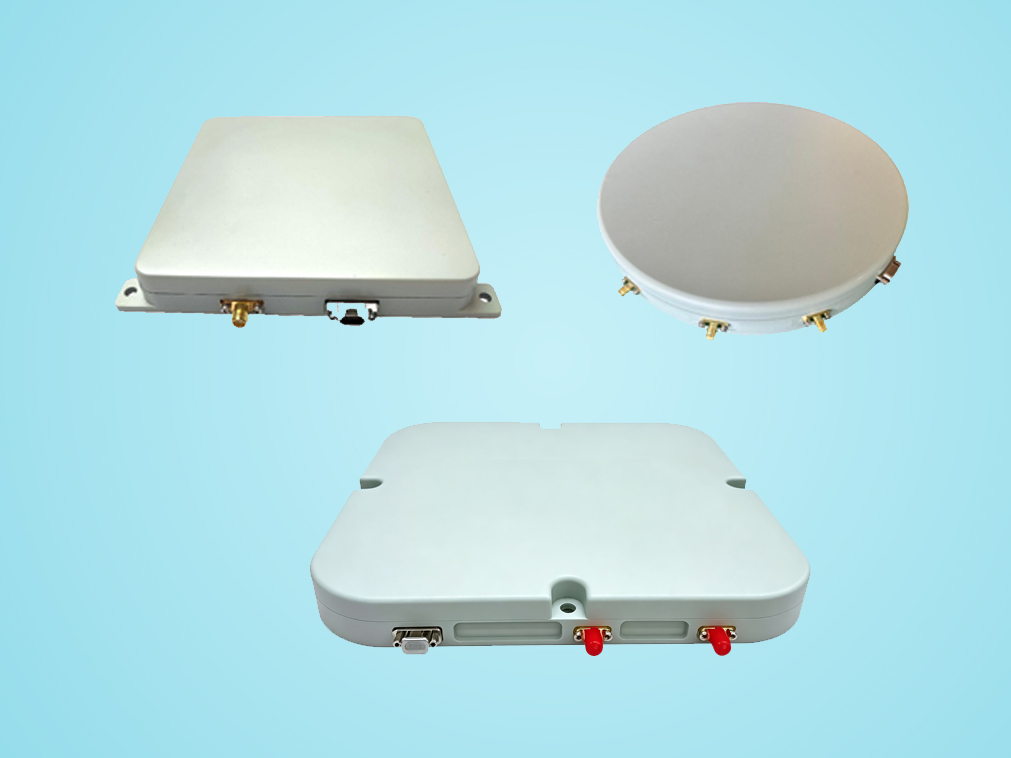
Most modern units pair a controlled reception pattern antenna (CRPA) with a digital backend. The antenna contains 4 to 7 elements that sample the wavefront spatially. The backend then computes nulls toward interference sources. This is the same principle covered in our article on how CRPA antenna works. For platform-specific guidance, refer to how to choose a GPS anti-jamming antenna.
A military grade anti-jamming GPS receiver adds a disciplined oscillator and an inertial measurement unit (IMU) for coasting through short outages. The integration is tighter than in commercial systems. Raw correlator outputs feed a Kalman filter that blends GNSS, IMU, and barometric data. When jamming exceeds nulling capacity, the receiver switches to dead-reckoning mode and reacquires within milliseconds after interference stops.
Military Grade Anti-Jamming GPS Receiver: Performance Metrics
The table below summarizes typical specifications that distinguish tactical units from civil aviation or survey receivers.
| Parameter | Civil Receiver | Military Grade Anti-Jamming GPS Receiver |
|---|---|---|
| Null depth | Not applicable | 50–70 dB with CRPA |
| Time to first fix (cold) | 30–45 s | 15–25 s with M-code |
| Jamming resistance | 20 dB (single element) | 80–100 dB effective |
| Spoofing protection | None or basic | SAASM/M-code authentication |
| Operating temperature | -20°C to +60°C | -40°C to +85°C |
| Vibration tolerance | 2 g RMS | 10 g RMS or higher |
These figures are not absolute. Actual performance depends on array geometry, number of elements, and backend processing power. The key takeaway is that a true military grade anti-jamming GPS receiver is a system, not a single chip.
Civil vs. Military Comparison
Why not simply use a high-end civil receiver with an external CRPA? Power, size, and cost. A military unit consumes 10 to 25 watts, weighs over 1 kg, and costs tens of thousands of dollars. It also requires security clearances for key fill and maintenance. For most commercial drones or agricultural vehicles, a civil receiver with a basic anti-jam filter is sufficient. But for armored vehicles, naval vessels, and critical infrastructure, the extra performance is non-negotiable. This distinction echoes the broader discussion in our article on the difference between anti-spoofing and anti-jamming.
Integration and Lifecycle
Deploying a military grade anti-jamming GPS receiver involves more than mounting hardware. You must manage cryptographic key distribution, periodic zeroization tests, and environmental qualification. Training operators on jammer detection alerts is equally important. Maintenance often requires returning the unit to a certified depot. The lifecycle can span 15 to 20 years with firmware updates delivered through secure channels.
External resources such as the GPS.gov technical documentation provide authoritative background on military GPS services and security modules. For procurement guidance, defense agencies publish detailed performance specifications that can serve as a benchmark.
In summary, a military grade anti-jamming GPS receiver is not simply a more expensive version of a commercial product. It is a hardened navigation system built around spatial filtering, cryptographic authentication, and tight IMU integration. Choosing one requires understanding the threat environment, the platform constraints, and the operational doctrine. Start with the antenna, verify the nulling performance, and never assume that anti-jamming alone covers spoofing.