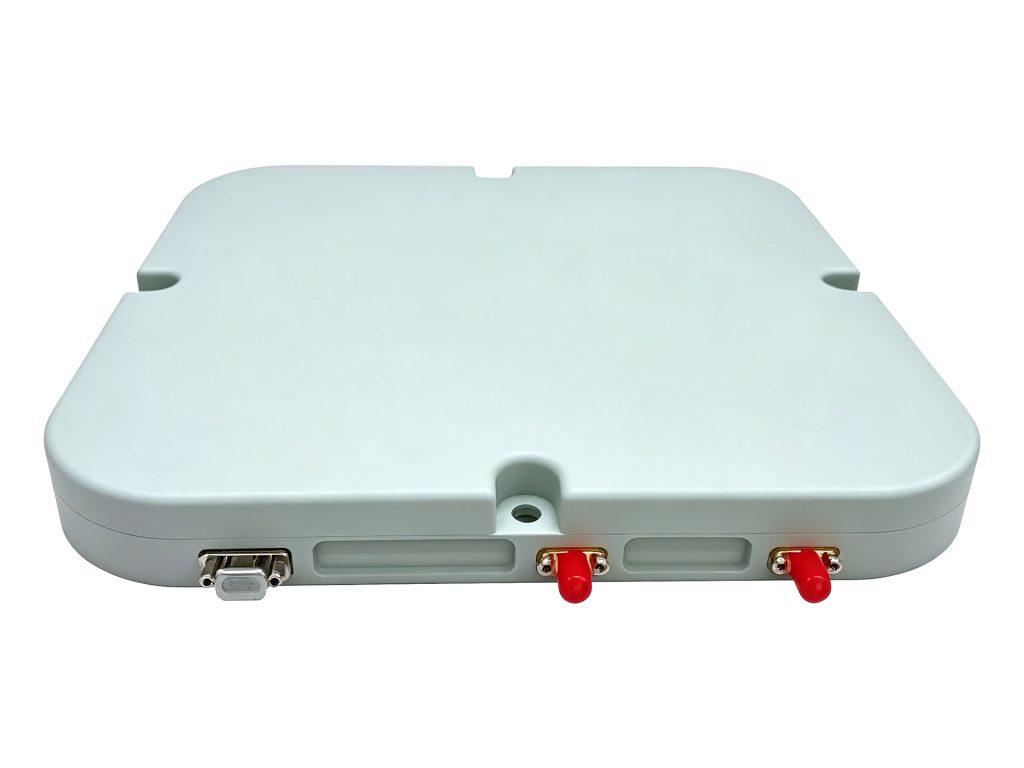
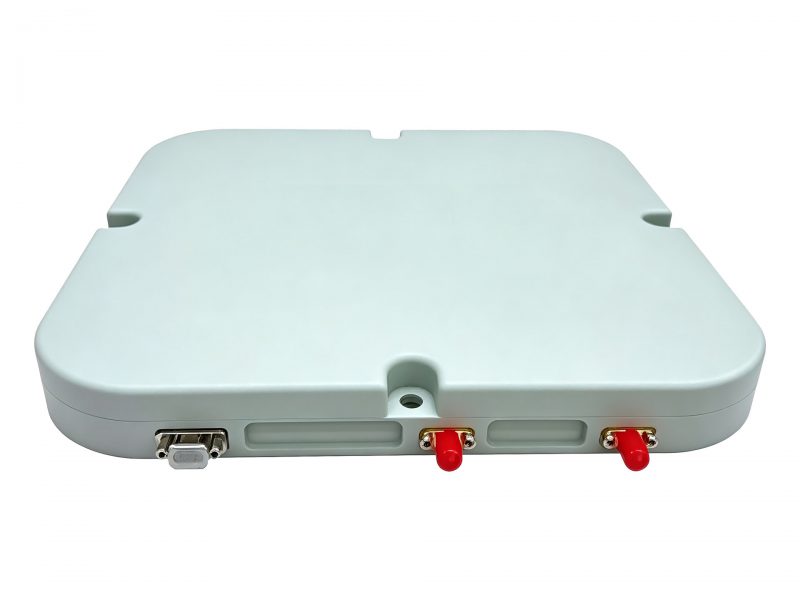
16-element anti-jamming antenna technology gives the BNT2511 its edge in contested RF environments. The unit covers GPS L1, GAL E1, and BDS B1, including BDS-B1c and BDS-B1i civil signals. A built-in receiver removes the need for a separate positioning module in many installations, which reduces cable clutter and simplifies system integration.
How the 16-Element Anti-Jamming Antenna Works
Each of the 16 elements feeds a processing chain that forms spatial nulls toward interference sources. The system suppresses narrowband, broadband, pulse, swept, and Gaussian jammers. In controlled tests, the 16-element anti-jamming antenna achieves a jamming-to-signal ratio of 100 dB for one jammer, 85 dB for seven jammers, and 70 dB for fifteen jammers. Those figures matter in contested RF environments where a single null is not enough.

Positioning and Timing Accuracy
Clean-signal performance is tight: horizontal and vertical accuracy are both ≤1.5 meters at 95%. When jamming is active, the BNT2511 holds position accuracy to ≤10 meters at 95%. Velocity accuracy stays within 0.2 m/s, and timing accuracy reaches ≤100 ns. These values make the unit suitable for UAV navigation, mobile timing, and land-vehicle defense.
Interfaces and Data Output
The main connector is a J30J-15ZK. Pins 1–2 and 3–4 are positive and negative power inputs, accepting 12–32 V DC. Pins 5–6 carry TTL serial for the anti-jamming module, and pins 7–8 carry TTL serial for the receiver. The SMA RF port outputs a -70 to -60 dBm signal for external GNSS receivers. The built-in u-blox ZED-F9P supports NMEA 0183 and UBX protocols. For more detail on message formats, see the u-blox ZED-F9P interface description and the NMEA 0183 standard.
Installation and Power
Use the XT30 male connector for DC input; 28 V is recommended but the module accepts 12–32 V. Power consumption is ≤25 W. When connecting TTL lines, wire TX to the flight controller RX, RX to TX, and GND to GND. Do not hot-plug USB-TTL adapters. If you use the SMA port, ensure the connected receiver does not back-feed more than 5 V.
Environmental and Safety Features
The BNT2511 operates from -40°C to +55°C and stores from -55°C to +70°C. It handles 96% relative humidity at 40°C and meets GJB150A rain requirements. Safety features include overvoltage protection, reverse-polarity protection, and continuous wave tolerance of at least 10 W.
System Health and Software Updates
The BNT2511 runs self-checks and status monitoring on power-up and during operation. Firmware for both the anti-jamming processor and the receiver can be updated through the TTL serial port, so field units can receive performance improvements without being removed. This is useful for long-term deployments in remote timing or navigation sites. The 16-element anti-jamming antenna also includes a built-in receiver, so a single firmware package can cover the RF front end and the positioning engine.
Typical Use Cases
This 16-element anti-jamming antenna is used for timing security in power, telecom, and finance; navigation for UAVs, UGVs, and USVs; convoy protection; and high-end logistics. It can replace a conventional active antenna or a complete GNSS receiver plus antenna in one housing.
What You Get
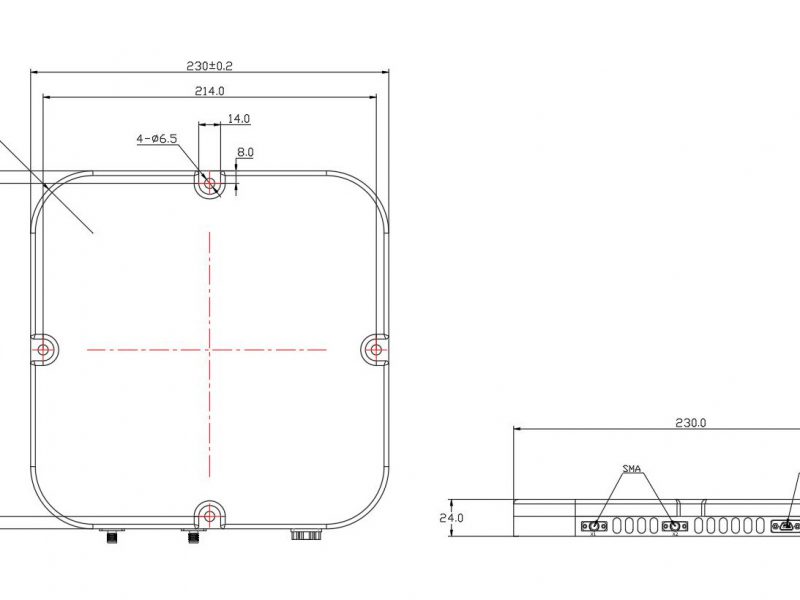
The BNT2511 ships as a self-contained 16-element anti-jamming antenna with an integrated receiver and antenna array. No external anti-jamming processor is required. You only need to provide DC power and either a TTL-capable controller or an SMA-equipped GNSS receiver. The enclosure measures 230 x 230 x 24 mm and weighs ≤1250 g, making it practical for vehicles and medium UAVs.

Why Choose the BNT2511
The BNT2511 combines a 16-element anti-jamming antenna, a multi-constellation receiver, and field-ready protection in a 230 x 230 x 24 mm package weighing ≤1250 g. Software upgrades are available through the serial port for both the anti-jamming module and the receiver, so the system can stay current without hardware changes.