
In GNSS-dependent operations, interference is not one problem. A jammer tries to drown out signals. A spoofer tries to make a receiver trust a false copy. That distinction shapes antenna design. Buyers often compare an anti-jamming antenna vs an anti-spoofing antenna as if they are competing options, but they solve different parts of the same resilience problem. One protects availability. The other protects integrity.
The Core Difference
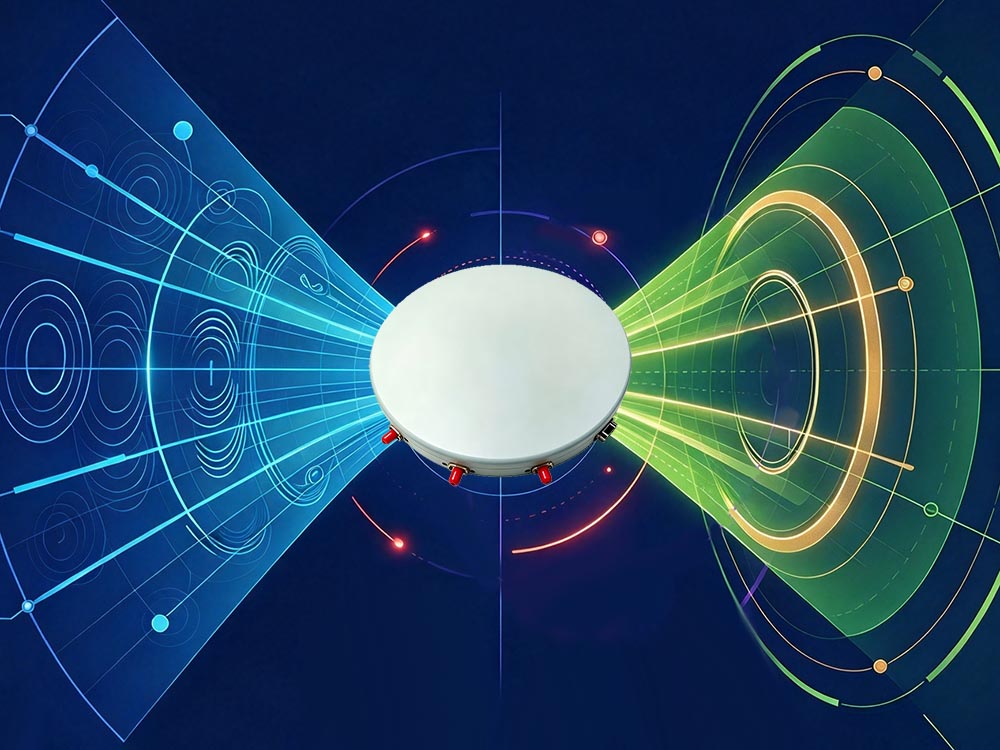
An anti-jamming antenna focuses on rejecting unwanted RF energy. An anti-spoofing antenna focuses on helping detect and reject counterfeit signals that appear valid. In simple terms: anti-jamming asks, “Can I hear the signal?” Anti-spoofing asks, “Should I believe it?”
| Dimension | Anti-Jamming Antenna | Anti-Spoofing Antenna |
|---|---|---|
| Primary threat | Broadband noise, sweepers, narrowband tones, accidental interference | Replay, meaconing, coordinated false GNSS signals |
| Main goal | Keep signals receivable by suppressing interference | Help detect, classify, and reject deceptive signals |
| What it fights | Power, frequency overlap, direction, polarization | Trust, authenticity, consistency, and origin |
| Typical techniques | Adaptive nulling, digital beamforming, filtering, high-linearity LNA, CRPA | Multi-element angle-of-arrival, multi-frequency, polarization diversity, signal-quality support |
| Processing load | Medium to high | High to very high |
| Key metrics | Null depth, J/S tolerance, dynamic range, C/N0 recovery, availability | Detection probability, false-alarm rate, time-to-detect, integrity risk |
| Standalone limit | Cannot authenticate a signal | Antenna alone cannot authenticate GNSS; receiver or crypto is required |
| Best fit | Jamming, RF interference, contested spectrum | Spoofing, meaconing, integrity-critical timing and positioning |
Why the Two Are Often Confused
Both can use antenna arrays. Both may rely on angle-of-arrival data. Both need calibration. The difference is intent and outcome. An anti-jamming array may steer a null toward a strong interferer. An anti-spoofing array may compare signal direction, power, and consistency to flag a false emitter. The hardware can overlap, but the algorithms and success metrics do not.
Anti-Jamming Antenna: Availability Defense
An anti-jamming antenna is designed to preserve reception when the RF environment becomes hostile. Common approaches include adaptive nulling, beamforming, notch filters, band-pass filters, and CRPA architectures. These designs help the receiver maintain tracking under high jammer-to-signal ratios.
The main trade-offs are size, cost, power, and calibration. More elements can mean deeper nulls and better beam control, but they also require more processing and careful installation. A poorly calibrated anti-jamming antenna can weaken wanted signals while trying to reject unwanted ones.
Anti-Spoofing Antenna: Integrity Defense
An anti-spoofing antenna adds value by supporting detection of false signals. Because spoofing often uses normal power levels and the same frequencies as real GNSS, it is harder to spot than jamming. A multi-element array can help by checking angle-of-arrival consistency. Multi-frequency support helps resist narrowband spoofers. Polarization diversity can add another layer of discrimination.
However, an antenna alone is rarely enough. Reliable anti-spoofing usually requires receiver logic, signal-quality monitoring, multi-constellation checks, inertial fusion, or cryptographic authentication such as Galileo OSNMA or GPS M-code. The antenna enables better data; the system makes the trust decision.
| Capability | Anti-Jamming Antenna | Anti-Spoofing Antenna |
|---|---|---|
| Suppress broadband jammer | Strong | Limited alone |
| Suppress narrowband interference | Strong with filters | Limited alone |
| Detect replayed signals | Indirect | Strong when integrated |
| Verify signal authenticity | No | Not at antenna level; needs receiver or crypto |
| Support AoA discrimination | Yes, for nulling | Yes, for detection |
| Handle mixed jamming and spoofing | Good with integration | Good with integration |
| Size, weight, and power | Moderate to high | High due to array and calibration |
Selection Guide by Mission
| Mission | Dominant Risk | Practical Direction |
|---|---|---|
| Commercial fleet | Multipath, accidental interference | Multi-frequency antenna and filtering; anti-jam optional |
| Defense convoy | Jamming and spoofing | CRPA with nulling plus anti-spoof receiver logic |
| Timing node | Spoofing | Multi-constellation receiver, OSNMA or M-code, holdover; array for high assurance |
| UAV | Jamming | Lightweight nulling antenna, filtering, IMU fusion |
| Maritime | Jamming and spoofing | Dual-polarized multi-band array and interference monitoring |
| Survey and construction | Multipath | Choke-ring or multi-frequency antenna; spoofing monitoring for critical work |
Specification Checklist
| Specification | Why It Matters | Anti-Jam Priority | Anti-Spoof Priority |
|---|---|---|---|
| Frequency bands | Multi-band resists narrowband threats | High | Very high |
| Array elements | More elements enable more nulls and better AoA | High | High |
| Null depth | Direct jam suppression | Very high | Medium |
| Phase-center stability | Supports position accuracy and consistency | Medium | High |
| Calibration | Poor calibration ruins nulling and AoA | Critical | Critical |
| Polarization | Helps separate wanted and unwanted signals | Medium | High |
| LNA linearity | Prevents saturation under strong jamming | Very high | Medium |
| Filtering | Rejects out-of-band interference | High | Medium |
| Receiver integration | Enables detection, authentication, and fusion | High | Critical |
Common Mistakes
-
Treating anti-jamming as a complete anti-spoofing solution.
-
Buying an array without planning for calibration.
-
Forgetting that the receiver performs the final trust decision.
-
Assuming one frequency band is enough.
-
Testing only one threat scenario.
-
Ignoring size, weight, power, and thermal limits.
FAQ
What is the main difference between an anti-jamming antenna and an anti-spoofing antenna?
An anti-jamming antenna protects availability by suppressing interference. An anti-spoofing antenna protects integrity by helping detect and reject false signals.
Can an anti-jamming antenna stop spoofing?
Usually not by itself. It may reveal direction-of-arrival anomalies, but reliable spoofing mitigation needs receiver processing, multi-frequency checks, or cryptographic authentication.
Is an anti-spoofing antenna enough?
No. An antenna can support detection, but GNSS authentication is a system function. The receiver, network, and cryptographic services matter.
Do I need both?
If credible threats include jamming and spoofing, yes. Modern resilient GNSS designs often combine a CRPA, multi-band filtering, and anti-spoofing receiver logic.
Final Take
An anti-jamming antenna is an availability tool. An anti-spoofing antenna is an integrity tool. The best architecture treats them as layers, not alternatives. Start with the threat model, then match antenna, receiver, and processing to the mission. In contested environments, the winning design is usually not a single antenna but a calibrated, multi-band, multi-element system that can both hear through interference and question what it hears.