
The term “anti-jamming antenna” gets used for two very different things. One is mostly metal, geometry, and filtering. The other is a powered array that senses interference and reacts in real time. If you’re choosing a GNSS antenna for a fixed timing rack, a convoy, or a UAV, the active vs passive anti-jamming antenna decision affects power, cost, installation, and how well you survive a real jammer.
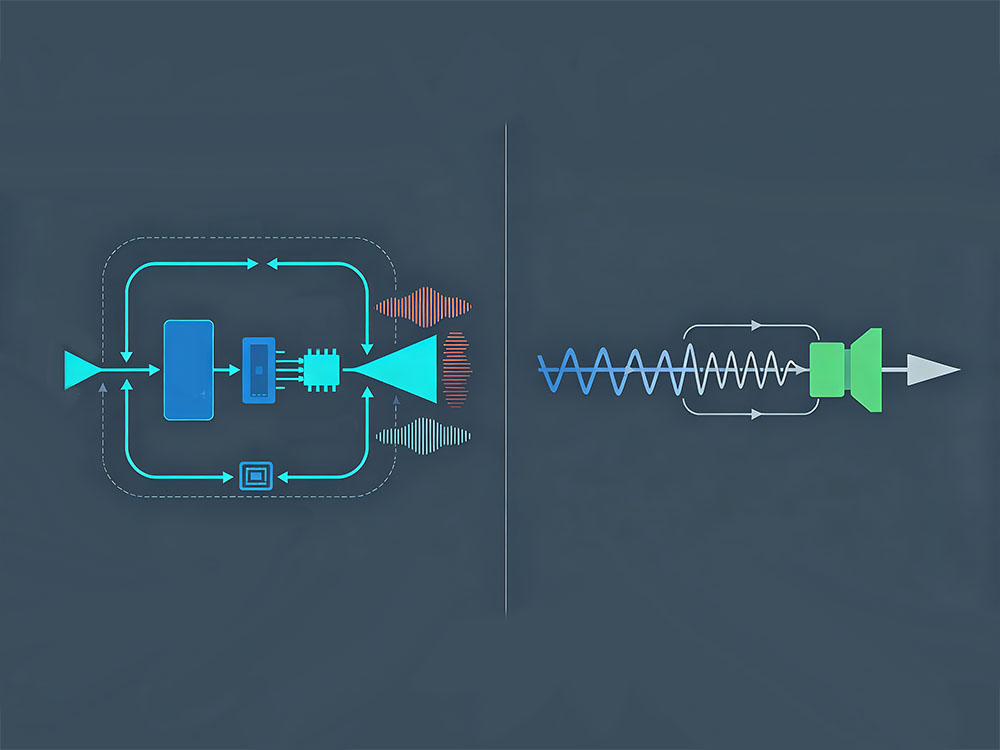
Here’s the short version.
| Question | Passive anti-jamming antenna | Active anti-jamming antenna |
|---|---|---|
| How does it reject jamming? | Fixed pattern, physical nulls, filtering, polarization, choke ring or ground plane | Adaptive beamforming, null steering, phase/amplitude control, digital processing |
| Can it move a null? | No | Yes |
| Power needed? | Usually none for the antenna itself; an LNA may draw a little | Yes, often several watts or more |
| Best at | Known, stable threats | Changing or multiple threats |
| Typical examples | Choke ring, filtered patch, horn, cavity-backed spiral | CRPA, digital beamforming array |
| Cost and complexity | Lower | Higher |
What a passive anti-jamming antenna can—and can’t—do
A passive design doesn’t try to outsmart the jammer. It makes the antenna hard to fool in the first place. A choke ring, for example, suppresses multipath and low-angle interference. A directional patch or horn favors satellites overhead. Filters knock down out-of-band signals before they reach the receiver. A good ground plane can also reduce unwanted pickup.
That approach works well when the threat is predictable. A fixed GNSS timing installation at a cell tower doesn’t move. The interference source may be known. The power budget may be tight. In that case, a passive antenna plus filtering can be the most reliable and cheapest option. No calibration, no firmware, no heat sink.
The catch: passive defenses run out of tricks when the jammer moves, changes frequency, or arrives from the same direction as the satellites you need. If the interference lands in-band and on-axis, geometry alone won’t save the fix.
What active anti-jamming adds
Active anti-jamming antennas put electronics at the antenna. A CRPA—controlled reception pattern antenna—uses multiple elements. A processor compares signals, estimates where interference is coming from, and adjusts phase and amplitude to create nulls toward jammers while keeping gain toward GNSS satellites.
That’s a big step up. An active array can track multiple interferers, including wideband and swept jammers. It can adapt as the platform turns or the threat moves. It can also work with inertial data to hold tracking when signals get weak.
The trade-off is real. You’re adding power, heat, calibration, and more failure points. An active antenna is closer to a small RF computer than a passive component. It needs clean installation, good grounding, and proper integration with the receiver.
Active vs passive anti-jamming antenna: specs that matter
Datasheets love big numbers. The useful comparison is more practical.
| Spec | Why it matters | Passive | Active |
|---|---|---|---|
| Null depth | How much jammer suppression you get | Fixed by design | Adaptive, often deeper |
| Null count | Number of jammers handled | Usually one fixed pattern | Multiple, depends on elements/channels |
| Frequency range | Match to GNSS bands and threat | Filter-dependent | Multi-band and wideband options |
| Convergence time | How fast it reacts | Not applicable | Milliseconds to seconds |
| SWaP | Size, weight, and power fit | Lower power; size varies | Electronics add size, heat, and draw |
| Calibration | Installation effort | Minimal | Required |
| Failure modes | Reliability | Fewer electronics | More points of failure |
Where each type earns its keep
| Use case | Better fit | Why |
|---|---|---|
| Fixed GNSS timing | Passive + filtering | Stable geometry, low power, low cost |
| Survey base station | Passive choke ring | Multipath rejection without electronics |
| Military convoy | Active CRPA | Moving jammers, multiple threats |
| UAV | Active or hybrid | Dynamic threat, but SWaP is tight |
| Maritime | Hybrid | Platform motion plus broad interference |
| Contested base | Hybrid | Filtering plus adaptive nulling |
Hybrid is not cheating
Most serious systems don’t pick one extreme. They combine both. Passive filtering and choke rings reduce strong out-of-band signals before they hit the active electronics. That protects the LNA and makes the adaptive array’s job easier. The active side then handles whatever gets through.
If you’re designing for a contested RF environment, think in layers: antenna geometry, filtering, adaptive nulling, receiver tracking, and inertial backup. The antenna is one layer, not the whole defense.
A practical buying checklist
-
Map the threat first. Direction, bandwidth, power, and whether it moves.
-
Check the platform. Power, heat, space, weight, and cable routing.
-
Ask how the antenna behaves with multiple jammers, not just one.
-
Demand test data. A simulated null depth is not the same as a field result.
-
Plan installation. Grounding, calibration, and cable loss can erase datasheet gains.
-
Compare total cost. The antenna is only part of the bill.
FAQ
Is active always better than passive?
No. Active is better when the threat changes or multiplies. Passive is better when the threat is known, power is tight, and simplicity matters.
Can a passive antenna stop GPS jamming?
It can reduce it if the geometry and filtering match the threat. It cannot adapt to a moving or on-axis jammer.
What is a CRPA?
A controlled reception pattern antenna. It’s an active anti-jamming array that steers beams and nulls electronically.
Do active anti-jamming antennas need power?
Yes. They need power for amplifiers, phase shifters, and processing. That affects platform design.
Which is better for a UAV?
Usually an active or hybrid design, because the threat changes as the aircraft moves. But SWaP limits often decide the final choice.
Bottom line
Pick passive when the threat is stable and the platform values low power, low cost, and simplicity. Pick active when the threat moves, multiplies, or the mission can’t afford a lost GNSS fix. In the real world, the best anti-jamming antenna is often a hybrid: passive filtering and geometry up front, active nulling behind it.