
GNSS interference is no longer limited to military conflict zones. At large public gatherings, a cheap portable jammer can force a police drone out of the sky or send it into manual mode. For law enforcement teams using UAVs for crowd monitoring, suspect tracking, or emergency response, losing position data is not an option. The BNT8AT 8-element anti-jamming antenna was built for exactly this kind of urban RF threat.
Police Drone Stays on Station During a Concert Jamming Attack
A metropolitan police department deployed a quadcopter UAV to monitor crowd flow at an outdoor music festival. Mid-flight, the drone’s standard GPS receiver lost lock. The flight controller switched to attitude mode, but the video downlink and automated loiter function were gone. The pilot had to land manually.
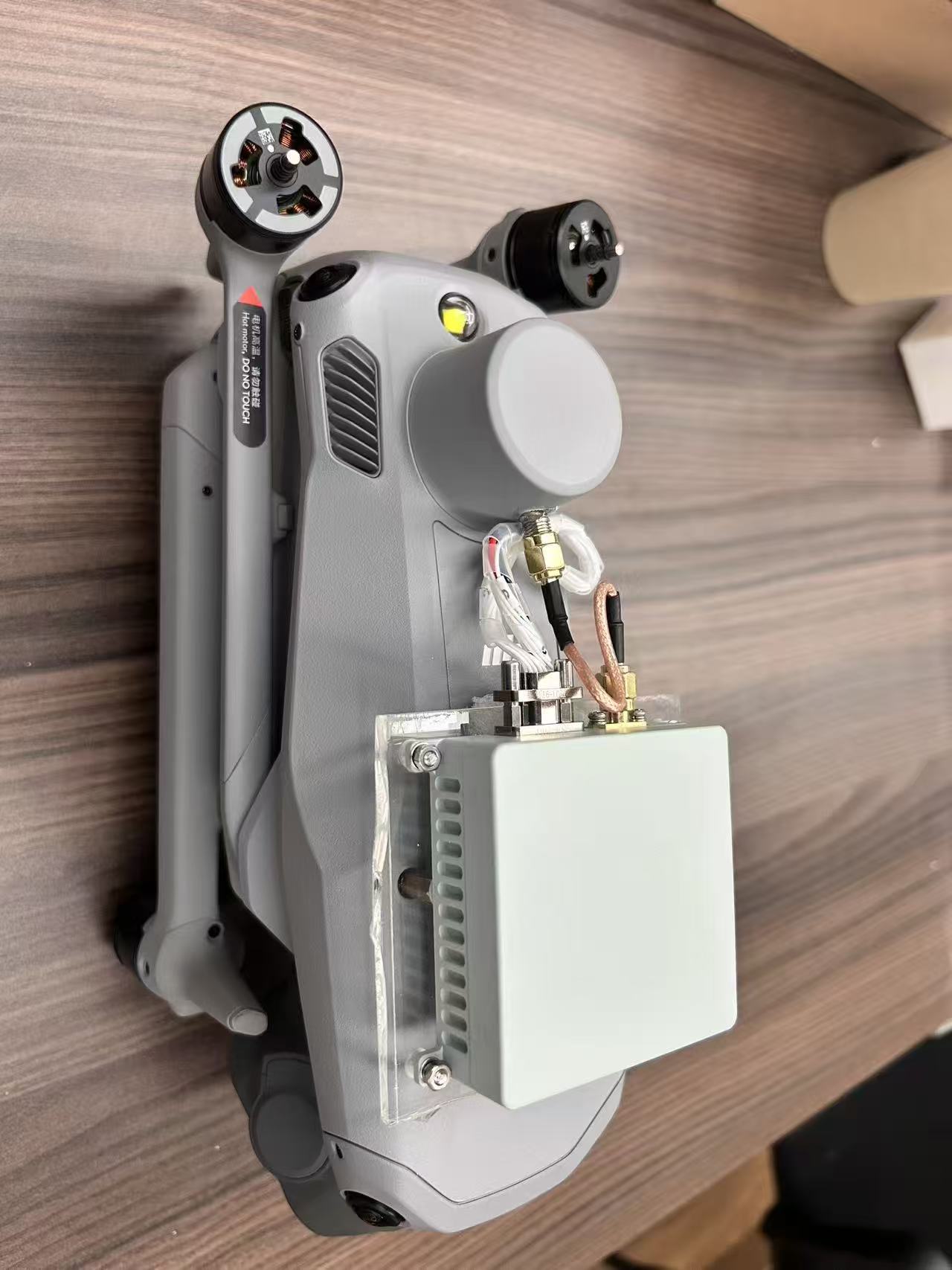
The interference source was later identified as a low-cost GPS jammer hidden in a backpack. The jammer output broadband noise across the L1 band, and the drone’s single-antenna receiver could not reject it.
The department retrofitted the UAV with the BNT8AT 8-element anti-jamming antenna. The eight-element array gave the onboard processor enough spatial degrees of freedom to form nulls toward the jammer while still receiving GPS L1 (1575.42 MHz ±10.23 MHz) and GLONASS G1 (1602 MHz +13.5 MHz) signals from other directions.
During a follow-up test at the same venue, the jammer was switched on again. This time, the drone held its loiter position and continued transmitting video. With three simultaneous interferers active, the BNT8AT maintained a jammer-to-signal ratio above 100 dB. Even when the test team activated seven jammers, positioning accuracy stayed within 10 m horizontal under active jamming—good enough for overwatch and crowd observation.
Compact Size and Dual-Constellation Redundancy
The BNT8AT weighs under 720 g and measures only 150 mm × 150 mm × 22.5 mm, so it added minimal drag to the quadcopter. The built-in receiver was configured to output NMEA 0183 over the TTL serial port, feeding position, velocity, and time directly to the flight controller. The 8–34 V DC input connected straight to the drone’s 6S LiPo battery through the XT30 connector, drawing less than 19 W.
Because the unit covers both GPS L1 and GLONASS G1, the drone had two independent satellite constellations available. If one system was partially blocked by terrain or multipath, the other still provided fixes. The J30J-9ZK connector also included a dedicated firmware upgrade UART, which allowed the department to update anti-jam algorithms in the field without removing the antenna.
A Practical Upgrade for Urban UAV Operations
The BNT8AT replaces a standard active antenna and a separate anti-jam board, saving integration time and reducing cable loss. For police departments, fire brigades, and event security teams that fly small UAVs in RF-contested airspace, the seven-null suppression capability is a practical upgrade—not a rack-mount afterthought.
When a single jammer can force a drone to land, the ability to reject seven simultaneous interferers changes the mission outcome. The BNT8AT keeps GPS/GLONASS PNT available exactly when the RF environment tries to take it away.