
GNSS Anti-Jamming Test Methods Explained starts with a practical question: can a receiver still acquire, track, and report a trustworthy position when interference, spoofing, or jamming enters the RF path? The answer depends less on one single test and more on a carefully layered test strategy. This article breaks down seven methods used by integrators, test labs, and receiver manufacturers, then shows how to combine them into a repeatable workflow.
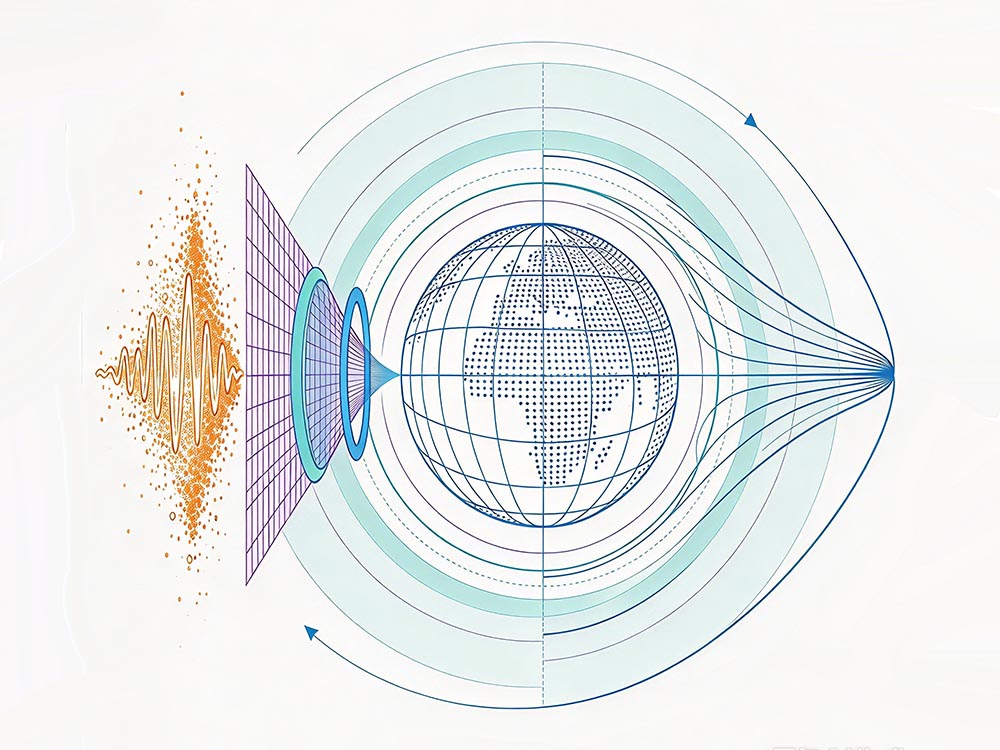
What GNSS Anti-Jamming Test Methods Explained Means in Practice
In practice, GNSS Anti-Jamming Test Methods Explained is a family of procedures that answer three questions: Does the receiver lose lock? How quickly does it recover? Does it produce a false but believable position? A good test program does not only push jamming power higher. It controls geometry, signal dynamics, multipath, bandwidth, and timing.
7 Key GNSS Anti-Jamming Test Methods Explained
The table below compares the most common approaches. Each method has a different role, and most serious programs use more than one.
| # | Method | Best For | Environment | Main Limit |
|---|---|---|---|---|
| 1 | Conducted RF injection | Receiver sensitivity and threshold testing | Shielded lab | Does not model antenna effects |
| 2 | Anechoic chamber OTA | Antenna, CRPA, and full-chain testing | Anechoic chamber | Higher cost and setup time |
| 3 | Record-and-replay | Real-world interference reproduction | Lab or chamber | Recorder bandwidth and dynamic range |
| 4 | Live-sky monitoring | Baseline behavior and anomaly detection | Open sky | Uncontrolled interference |
| 5 | SDR simulation | Scalable scenario generation | Lab | Model fidelity must be verified |
| 6 | CRPA and array testing | Spatial nulling and direction finding | Chamber or field | Complex calibration |
| 7 | Hybrid digital twin | End-to-end mission risk analysis | Mixed | Requires strong data governance |
1. Conducted RF Injection: A Precise GNSS Anti-Jamming Test Method
Conducted RF injection feeds GNSS signals and jamming signals directly into the receiver port. It removes antenna variables, so engineers can measure acquisition threshold, tracking loss, and recovery time with tight repeatability.
This method is often the first step in GNSS Anti-Jamming Testing. It is excellent for comparing firmware versions, filters, and baseband algorithms under the same J/S ratio.
2. Anechoic Chamber OTA: Realistic GNSS Anti-Jamming Test Methods
Over-the-air testing in an anechoic chamber adds antennas, cables, phase centers, and array behavior. For CRPA systems, this is where spatial filtering proves itself. The chamber also allows controlled angle-of-arrival tests for jamming and spoofing.
Use this method when the question is not only “does the receiver survive?” but “does the full antenna-receiver chain reject the threat from a realistic direction?”
3. Record-and-Replay: Field-Realistic GNSS Anti-Jamming Test Methods
Record-and-replay captures live RF scenes and replays them in the lab. It preserves real multipath, Doppler, and interference signatures that are hard to script manually.
Teams often pair this with jamming simulation to add repeatable threat layers. The main caution is calibration: a recorder can compress or clip strong jammers, which changes the test.
4. Live-Sky Monitoring: Real-World GNSS Anti-Jamming Test Methods
Live-sky monitoring establishes a baseline. It records C/N0, position residuals, AGC levels, and satellite visibility before any controlled test begins.
This method cannot replace a lab test, but it exposes environmental quirks that may otherwise be mistaken for jamming. It also helps validate that a simulator or replay file matches local conditions.
5. SDR Simulation: Scalable GNSS Anti-Jamming Test Methods
Software-defined radio simulation generates multiple constellations, frequencies, and interference waveforms from one platform. It is scalable, repeatable, and easy to automate.
For teams selecting hardware, a flexible GNSS simulator can reduce cost while supporting many scenarios. However, simulation models must be checked against chamber or field data.
6. CRPA and Array Testing: Spatial GNSS Anti-Jamming Test Methods
CRPA and array testing focuses on spatial rejection. The test must verify gain patterns, null placement, calibration stability, and beamforming under dynamic motion.
This is one of the most demanding GNSS Anti-Jamming Test Methods Explained here because it combines RF, mechanical, and algorithmic variables. Small phase errors can create large performance changes.
7. Hybrid Digital Twin: Advanced GNSS Anti-Jamming Test Methods Explained
A hybrid digital twin combines lab measurements, field recordings, and simulation models. It allows teams to test scenarios that are too dangerous, expensive, or rare to run physically.
This approach is powerful for mission planning. It can estimate probability of loss of lock, position error growth, and recovery time across many routes and threat levels.
Key Metrics in GNSS Anti-Jamming Test Methods Explained
Metrics turn a test into an engineering decision. The table below lists common measurements and what they reveal.
| Metric | What It Tells You | Example Target |
|---|---|---|
| J/S ratio at loss of lock | Receiver threshold under interference | Scenario-specific |
| C/N0 degradation | Tracking margin | Less than 3 dB drop |
| Time to first fix | Acquisition robustness | Within defined limit |
| Tracking continuity | Cycle slip and lock loss behavior | No unexplained gaps |
| Position error growth | Navigation drift after jamming | Horizontal and vertical limits |
| Recovery time | How fast the receiver returns | Seconds, not minutes |
| False lock rate | Spoofing or jamming confusion | Zero in critical modes |
For civil and safety-related work, ITU recommendations and regional spectrum rules may also shape acceptable interference levels.
How to Build a GNSS Anti-Jamming Test Methods Explained Workflow
A practical workflow usually follows this order:
-
Define the threat. List jammer types, power levels, bandwidths, and directions.
-
Set the baseline. Run live-sky and conducted tests without interference.
-
Add controlled interference. Start with conducted RF injection, then move to OTA.
-
Validate with replay or simulation. Compare scripted and recorded scenarios.
-
Repeat across units. Test temperature, aging, and production spread.
-
Document pass/fail criteria. Include recovery, accuracy, and false-lock limits.
This sequence keeps variables manageable. It also avoids the common mistake of jumping straight into a complex chamber test before the receiver behavior is understood.
Common Mistakes in GNSS Anti-Jamming Test Methods Explained
-
Testing only one jamming frequency.
-
Ignoring antenna phase and array calibration.
-
Using unrealistic J/S ratios that saturate the front end.
-
Recording interference without checking recorder dynamic range.
-
Treating simulation as a substitute for all physical testing.
-
Forgetting to test recovery after the jammer stops.
-
Omitting spoofing-like signals from the threat model.
Each mistake can hide a real failure mode. A balanced program uses lab, chamber, field, and simulation data together.
FAQ: GNSS Anti-Jamming Test Methods Explained
What is the best GNSS anti-jamming test method?
There is no single best method. Conducted injection is best for repeatability, chamber testing is best for antenna and CRPA behavior, and replay is best for realistic interference scenes.
How often should anti-jamming tests be repeated?
Repeat after firmware changes, antenna redesigns, enclosure changes, or new threat intelligence. Production units may need sample-based retesting.
Can simulation replace field testing?
No. Simulation is essential for scale, but it must be calibrated with chamber or field measurements.
What is a good J/S threshold?
It depends on the receiver, antenna, and mission. The threshold should be defined by the use case, not by a generic number.
Final Take on GNSS Anti-Jamming Test Methods Explained
GNSS Anti-Jamming Test Methods Explained is ultimately about confidence. A single test can show a receiver works once. A layered program shows why it works, where it fails, and how quickly it recovers. By combining conducted RF injection, chamber OTA, record-and-replay, live-sky monitoring, SDR simulation, CRPA testing, and hybrid digital twins, teams can build a defensible anti-jamming test strategy.