
Project Background and the Real Problem
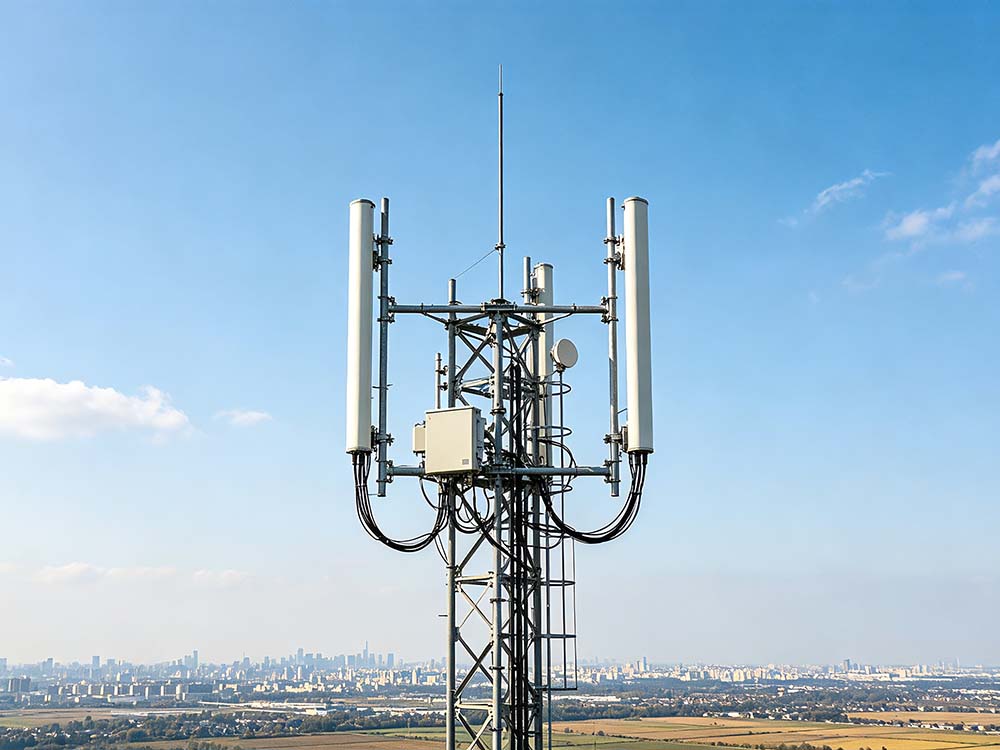
A cluster of communication base stations in a mountainous area of Sichuan had been struggling with intermittent GNSS timing failures for months. These stations rely on GPS L1 and BDS B1i signals for precise synchronization. Without stable timing, handovers between cells start failing, data throughput drops, and in some cases, entire sectors go offline.
The area is remote but not quiet. Several mining operations nearby use unlicensed radio equipment. A highway construction site added more RF noise. On top of that, at least two incidents pointed to deliberate interference—someone driving through the valley with a low-cost jammer was enough to knock out timing for every station within a few kilometers.
When GNSS signals disappeared, the base station clocks began to drift. After a few hours, the drift was large enough to cause synchronization errors. Maintenance teams had to visit the sites repeatedly, sometimes in bad weather, just to reset the timing modules. The operator needed a fix that could survive both accidental interference and intentional attacks without constant human intervention.
Purchased Antenna Specifications
The operator selected the 16-Element Anti-Jamming and Anti-Spoofing Antenna BNT2512 Ultimate Protection. This is not a standard patch antenna. It integrates a 16-element array, an anti-jam processor, and a u-blox M10 receiver inside a single low-profile housing measuring Φ370 mm × 28.7 mm and weighing under 2.6 kg.

The antenna works across BDS B1i and GPS L1 simultaneously. It actively nulls up to 15 independent jamming sources while stripping away spoofing signals. The RF front end tolerates continuous wave power up to 10 W without damage, which matters when a jammer is placed close to the station. Power input ranges from 12 to 34 V DC, and total draw stays under 40 W. The unit can output NMEA 0183 or u-blox protocol data over TTL serial, or it can feed a standard SMA RF output for direct connection to existing timing receivers.
Field Performance and Data
The first BNT2512 was installed on a base station that had suffered the most outages. The site is located on a ridge with clear line of sight to the valley road below. Within a week, the station logged three separate interference events that would have previously caused timing alarms.
In the first event, a broadband jammer swept through the area for about 20 minutes. The BNT2512 held synchronization without a single timing error. The onboard processor formed spatial nulls toward the moving jammer and maintained tracking on authentic satellites. In the second event, a pulsed interference source appeared from a nearby construction site. The antenna suppressed it immediately. The third event was more concerning: a spoofer attempted to pull the timing signal off by broadcasting fake GPS signals. The anti-spoofing engine rejected the false signals, and residual spoofing CN0 never exceeded 20 dB—far too weak to confuse the downstream timing receiver.
Across a 30-day test period, the protected station recorded zero timing losses. Two neighboring stations without the BNT2512 experienced four timing alarms in the same period. The difference was clear. The 16-element array provided sharper spatial filtering than the previous single-element antennas. Even with seven simultaneous interferers active during a stress test, suppression stayed above 105 dB. With fifteen jammers, performance still held at 95 dB or better.
Project Value
For the operator, the main value was reliability. Before the BNT2512, every interference event meant a possible truck roll to a remote mountain site. After installation, the station simply kept working. That translated into fewer service interruptions, lower maintenance costs, and no more emergency call-outs for timing resets.
There was also a security angle. The spoofing attempt showed that someone in the area was not just causing accidental noise—they were actively trying to disrupt the network. The BNT2512 handled it without the operator even knowing until reviewing logs. For critical infrastructure like telecom base stations, that kind of silent protection is worth the investment.
The deployment proved that a 16-element anti-jamming and anti-spoofing antenna is practical for fixed infrastructure, not just military vehicles or UAVs. With a single-cable RF design and standard serial output, the BNT2512 dropped into the existing timing architecture without major rework. The housing survived weeks of rain and humidity in the Sichuan mountains without any performance change.
In the end, the project gave the operator something they had been missing: a timing source that stays locked when the RF environment turns hostile. For a telecom network, that’s the difference between a minor annoyance and a full-blown service outage.