
Project Background and Pain Points

A section of the railway network in Xinjiang relies on GNSS timing and monitoring systems for safe operation. The line runs through remote areas where RF interference is not always accidental. Train positioning, track-side sensor synchronization, and communication handovers all depend on stable GNSS signals. In late 2024, operators began reporting intermittent timing drift and position jumps on the monitoring screen. Some incidents lasted only a few minutes, others stretched for over an hour. Maintenance teams had to travel long distances to check equipment, only to find no obvious fault.
The root cause was interference. A mixture of cheap personal jammers, passing vehicles with illegal devices, and occasional construction equipment created unpredictable GNSS denial events. The existing timing receivers had no spatial filtering capability. They simply lost lock and triggered alarms across the dispatch system. Replacing the entire timing infrastructure was not practical. The railway operator needed a compact, production-ready anti-jamming module that could be installed quickly at vulnerable sites without major civil work.
Procurement Specification
The project team selected the BNTDFE4A dual-band four-element anti-jamming antenna. This unit integrates the antenna array, anti-jamming processor, and navigation receiver into a single housing. It measures 170×150×20 mm and weighs 670 grams, which is light enough for pole mounting or cabinet installation along the track.
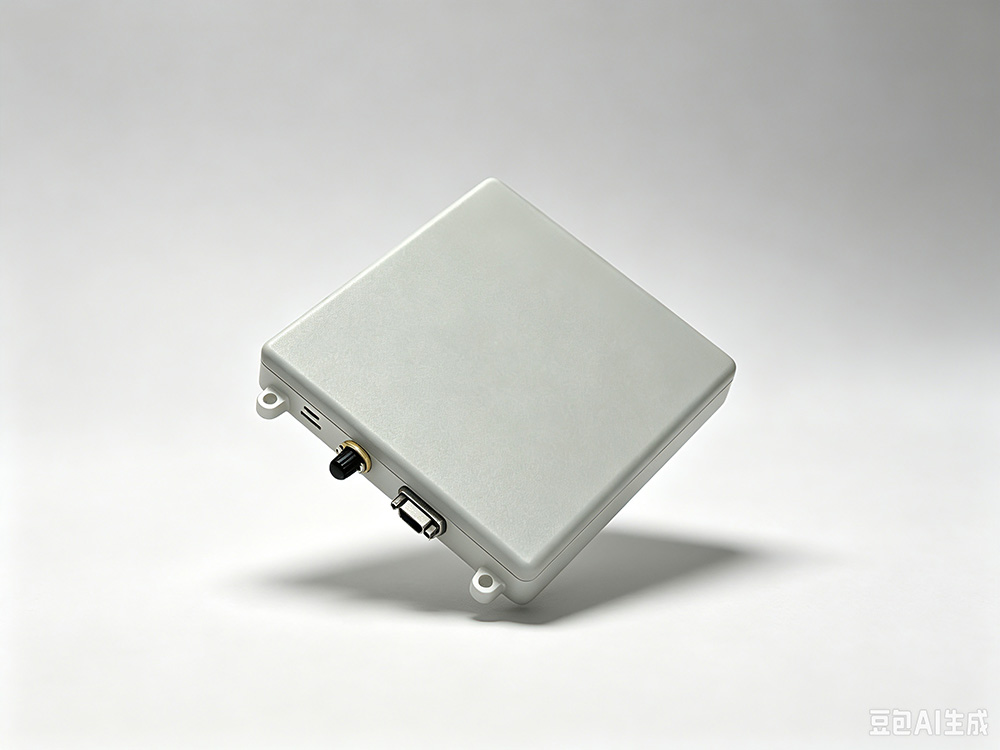
The BNTDFE4A covers two frequency groups: BDS-B1, GPS-L1, and Galileo-E1 on the first band, and BDS-B3 on the second. Each band uses a four-element array with independent anti-jamming processing. This means the system can form spatial nulls toward up to three interference directions per band simultaneously, without degrading the other band. The built-in receiver is a Ublox X20P module, so no external GNSS receiver is required.
Power input is 9–36 VDC, with typical consumption of 18 W. The unit provides an RS422 serial port at 115200 baud, a 3.3V LVTTL UART, NMEA0183 output, and a 1PPS signal. The connector is a J30J-15ZKP type. Four 4.2 mm mounting holes spaced 160×120 mm fit standard brackets and plates.
Actual Performance and Data
The first BNTDFE4A was installed at a trackside communication hut near a known interference hotspot. The unit was mounted on an existing pole bracket, with the four mounting holes aligned to the 160×120 mm pattern. Power was taken from the site’s 24 VDC backup bus, and the RS422 output was connected to the railway timing and monitoring network.
After initial calibration, the team ran a series of controlled interference tests. A single broadband jammer placed 50 meters from the antenna was suppressed by more than 110 dB. Three jammers positioned at different angles around the site were rejected at 95 dB or better. Even with a swept-frequency jammer and a pulsed jammer active on the same band, the receiver maintained lock and continued outputting valid NMEA sentences. The dual-band design was also verified: interference on L1 did not affect B3 reception, and vice versa.
During a three-month monitoring period, the site recorded zero GNSS timing alarms. Before the retrofit, the same location averaged five to eight alarms per week. Positioning data on the monitoring screen remained stable, with no jumps or dropouts. The 1PPS output stayed within the required tolerance for railway synchronization. Power consumption held at 18 W, and the RS422 link showed no errors over long cable runs from the pole to the indoor equipment.
Project Value
The BNTDFE4A solved the interference problem without changing the existing railway timing architecture. Because the antenna array, anti-jamming processor, and receiver are integrated into one 670-gram module, installation took less than half a day. The 18 W power draw fit easily within the site’s DC budget. The wide 9–36 VDC input range meant no additional voltage regulation was needed.
The most important benefit was the independent dual-band processing. A single-band anti-jam solution would have left one frequency group exposed. The BNTDFE4A protected both B1/L1/E1 and B3 simultaneously, with up to three nulls per band. That covered the realistic multi-source interference environment found along railway corridors in Xinjiang. The project demonstrated that effective GNSS protection can be deployed in remote, space-constrained locations without rack-sized equipment. Based on the results, the railway operator plans to extend the same module to other interference-prone sections of the line.