
How to choose a GPS anti-jamming antenna is not a trivial question. Jammers are cheap, portable, and increasingly common in urban, industrial, and even agricultural settings. A single weak point in your receiver chain can knock out positioning for minutes or hours, affecting safety. The right antenna design can restore resilience, but only if you match it to the actual threat.
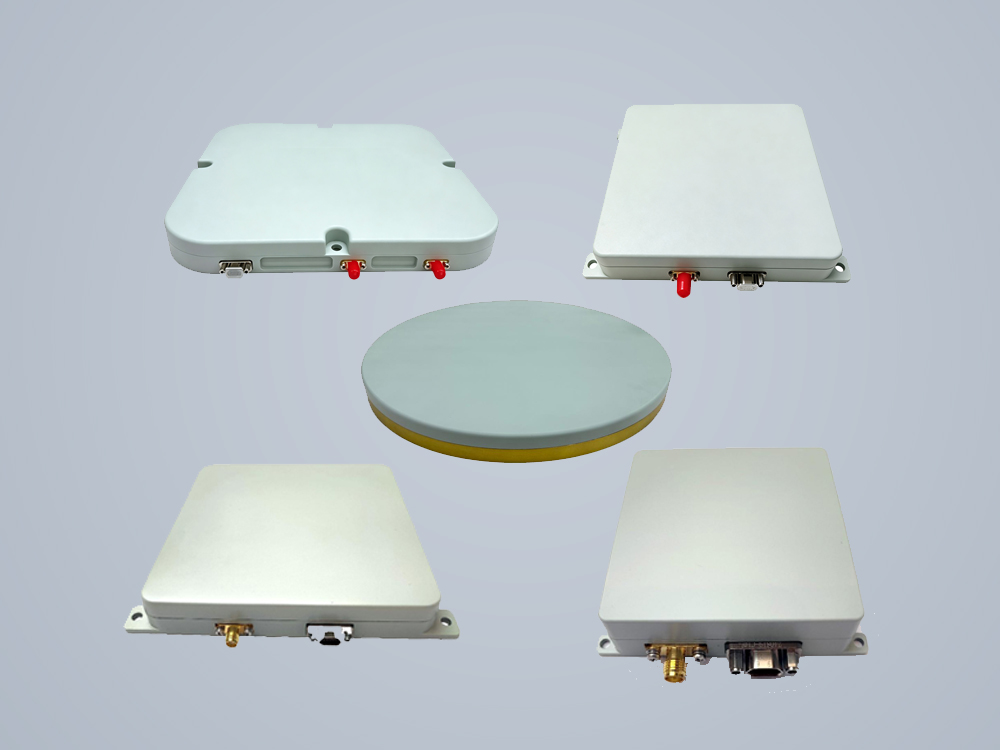
Start with Threat Assessment
Before selecting hardware, map the interference landscape. Are you operating near urban centers with frequent personal privacy jammers? Or in remote areas with occasional military exercises? The answer changes your design priorities. According to a GPS World report on jamming trends, interference incidents rose by 38% in 2025. If low-power jammers are the main risk, a simple fixed radiation pattern antenna (FRPA) with good filtering may work. For high-power or multiple simultaneous jammers, you need a controlled reception pattern antenna (CRPA).
How to Choose a GPS Anti-Jamming Antenna: CRPA vs. FRPA
This section directly answers the core question. The table below summarizes the main trade-offs.
| Feature | FRPA | CRPA |
|---|---|---|
| Cost per unit | $200–$800 | $2,500–$12,000 |
| Size/weight | Compact, under 300 g | Larger, 500 g–1.5 kg |
| Null depth | 20–30 dB | 40–60 dB |
| Simultaneous jammers | 1–2 | 4–7 |
| Integration effort | Low | High (needs digital backend) |
CRPA arrays adapt in real time, placing spatial nulls toward jammers. FRPA designs rely on fixed element pattern shaping. For most commercial fleets, an FRPA with a low-noise amplifier (LNA) and sharp pre-filter is the practical first step. However, if you operate in contested electromagnetic environments, the extra cost of a CRPA pays off quickly.
Key Electrical Specs to Compare
When you evaluate how to choose a GPS anti-jamming antenna, three specifications matter most: axial ratio, LNA gain, and out-of-band rejection. Axial ratio below 3 dB preserves circular polarization. LNA gain between 26 and 40 dB compensates cable losses. Out-of-band rejection of at least 40 dB at 100 MHz offset prevents adjacent-band overload. Also check group delay variation. Values under 1 nanosecond across the L1/L2 bands maintain carrier-phase precision. Ignore this and you may see position drift even without active jamming.
Physical and Mounting Constraints
Another factor in how to choose a GPS anti-jamming antenna is mechanical fit. A 7-element CRPA array is heavy and requires a stable ground plane. Rooftop mounting on a truck or vessel works well. For UAVs or handheld receivers, weight and drag become critical. Always match the connector type (TNC, SMA, or N-type) to your existing cabling. For detailed wiring tips, see our <a href=”/gps-anti-jam-installation”>GPS anti-jam installation guide</a>.
Field Testing Essentials
Never trust a datasheet alone. Test with a real jammer simulator or a swept interference source. Measure carrier-to-noise ratio (C/N0) before and during jamming. A good antenna should hold C/N0 above 30 dB-Hz under mild interference and recover within 100 ms after the jammer stops. Record results at multiple azimuth and elevation angles. If the antenna cannot maintain lock during a simple single-tone test, it will fail in a complex scenario.
Common Mistakes
A frequent error in how to choose a GPS anti-jamming antenna is over-specifying the array. Other mistakes include:
-
Buying a CRPA when an FRPA would do, wasting budget and payload capacity.
-
Overlooking the pre-filter. Without a sharp pre-filter, out-of-band signals saturate the LNA.
-
Ignoring cable loss. A 3 dB loss halves effective jammer resistance.
-
Skipping firmware updates for the digital backend that controls null steering.
Final Decision Checklist
Use this checklist to finalize how to choose a GPS anti-jamming antenna for your mission:
-
Identify maximum expected jamming power and number of sources.
-
Decide FRPA vs. CRPA based on the table above.
-
Verify axial ratio, LNA gain, and group delay variation.
-
Confirm mechanical fit, connector, and power budget.
-
Run a field interference test with the exact receiver you plan to use.
After going through these steps, the answer to how to choose a GPS anti-jamming antenna becomes much clearer. Focus on the threat first, then match the antenna architecture, and finally validate performance under real conditions. A well-chosen antenna turns a vulnerable GNSS receiver into a hardened navigation tool.