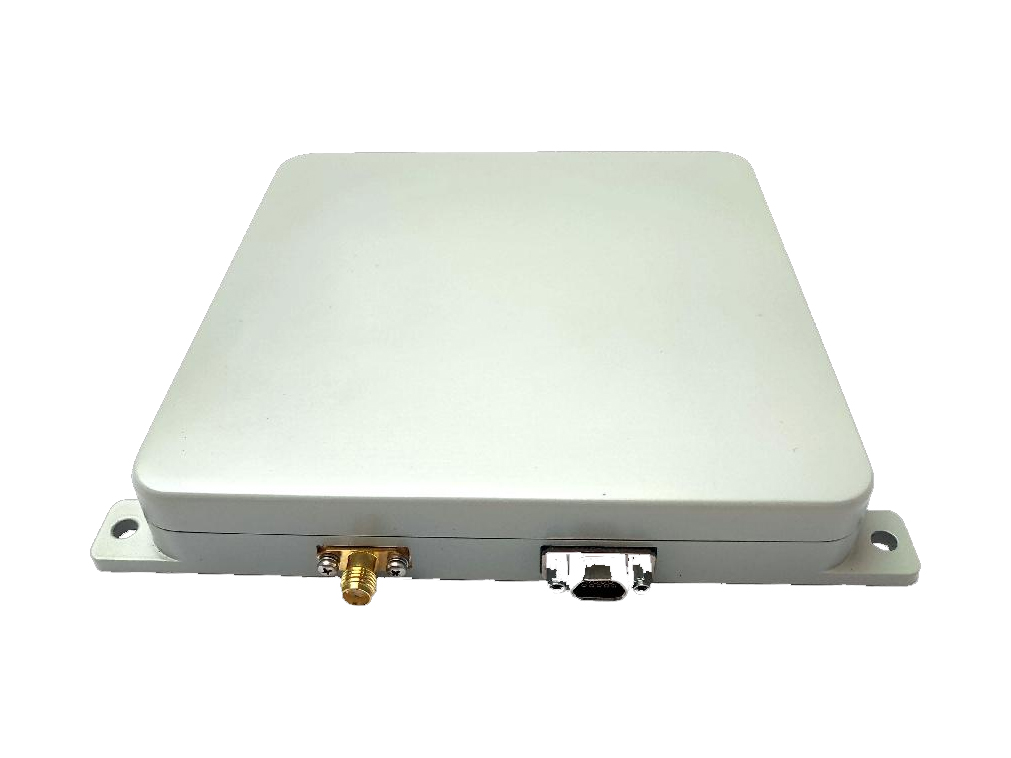
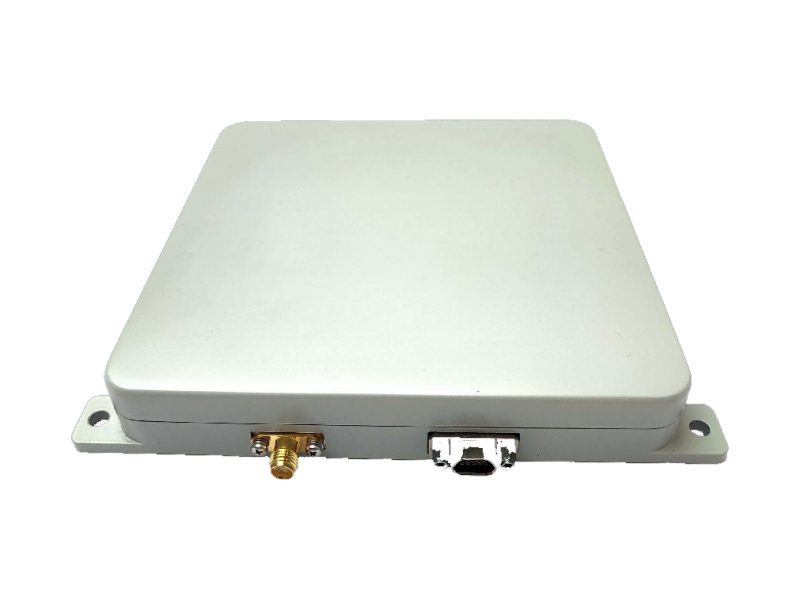
Modern drones and unmanned vehicles often rely on multiple GNSS constellations for redundancy. But when interference hits one band, it can knock out all of them. The BNT009ProG1 triple-band anti‑jamming antenna solves that problem. This compact terminal integrates an 8‑channel array, advanced nulling processor, and a multi‑constellation receiver into a rugged 150×130mm housing. It supports BDS‑B1i, GPS‑L1, GAL‑E1, and GLONASS‑G1 simultaneously, with up to 105dBc single‑jammer suppression.

This page covers the core specifications, integration tips, and common questions about the BNT009ProG1. If you need a reliable triple‑band anti‑jamming antenna for your autonomous platform, keep reading.
What Makes This Triple‑Band Anti‑Jamming Antenna Stand Out?
A triple‑band anti‑jamming antenna must handle multiple frequencies without cross‑band interference. The BNT009ProG1 uses an 8‑channel architecture – each channel can be independently configured for a specific band. This allows it to cancel jammers on BDS, GPS, GLONASS, and GALILEO bands simultaneously.
Why 8 Channels Matter
Most anti‑jamming antennas use 4 elements. The BNT009ProG1 goes further with 8 channels. This provides:
-
Finer null resolution – deeper and narrower nulls for better jammer cancellation.
-
More degrees of freedom – can handle complex interference patterns with multiple sources.
-
Band‑specific processing – each channel can be optimised for its particular frequency.
For operators flying in dense urban or industrial areas, the extra channels give a measurable margin of safety. This triple‑band anti‑jamming antenna is built for scenarios where standard 4‑channel units fall short.
Multi‑Constellation Support
The BNT009ProG1 supports four major GNSS systems:
-
BeiDou (BDS‑B1i)
-
GPS (L1)
-
GLONASS (G1)
-
Galileo (E1)
This multi‑constellation capability provides:
-
Redundancy – if one system is jammed, others remain available.
-
Improved accuracy – more satellites means better dilution of precision (DOP).
-
Global operability – works in any region, regardless of which constellation is strongest.
The triple‑band anti‑jamming antenna processes all these signals through its 8‑channel front‑end, delivering a clean composite output to your receiver.


Interference Types Handled
The adaptive nulling engine is trained against real‑world interference encountered in drone operations:
-
Band‑limited Gaussian white noise – from wideband transmitters.
-
Spread‑spectrum matched‑spectrum – often from spoofing devices.
-
Pulse interference – from radar or switching supplies.
-
Sweep interference – from frequency‑hopping radios.
-
Mixed interference – multiple types arriving simultaneously.
The triple‑band anti‑jamming antenna detects each type automatically and adjusts its nulling strategy without user configuration.
Mechanical and Electrical Design
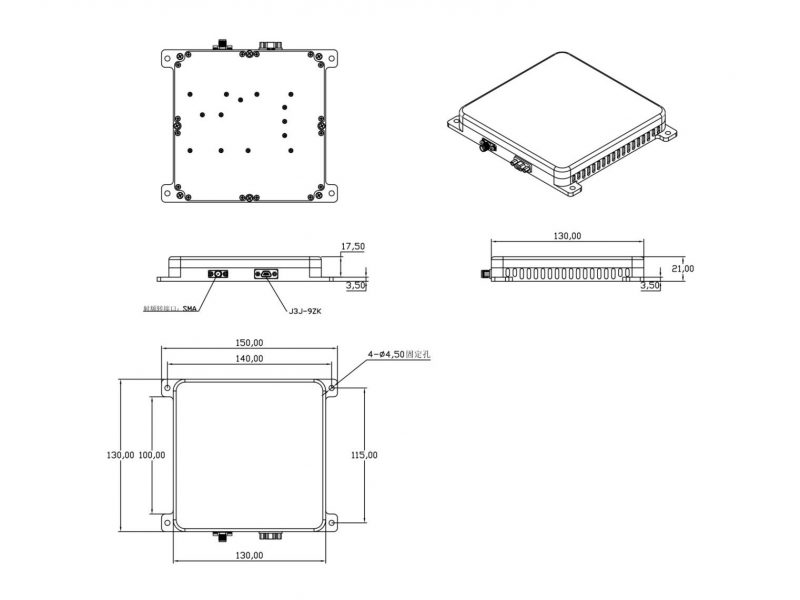
The BNT009ProG1 measures 150×130×21 mm and weighs ≤400g. Power consumption is ≤12W at room temperature – lower than many comparable units. Input voltage range is 5‑17V DC, with reverse‑polarity and over‑voltage protection.

The housing is light grey aluminium with a robust radome. Mounting uses M3 screws through a 4‑hole flange. The RF output is via SMA connector, and a separate J30J‑9ZK connector handles power and data (TTL serial for NMEA0183 output and firmware upgrades).
Installation and Integration
Installing the BNT009ProG1 triple‑band anti‑jamming antenna involves:
-
Mounting – Secure the flange to your airframe or vehicle using M3 screws.
-
Power – Connect XT30 to 5‑17V DC (12V recommended).
-
Data connection – Choose either:
-
Test – Verify NMEA0183 data output or RF lock status.
No external ground plane is needed – the array includes an integrated counterpoise.
Application Scenarios
This triple‑band anti‑jamming antenna is ideal for:
-
Drone navigation security – protects against jamming during critical missions.
-
UGV and unmanned vessel navigation – reliable positioning in port or industrial environments.
-
Fleet management – ensures continuous tracking of convoys.
-
Precision timing – for power, telecom, and financial infrastructure requiring GNSS time synchronisation.
-
High‑end logistics – autonomous delivery systems operating in RF‑noisy urban areas.
Conclusion
The BNT009ProG1 triple‑band anti‑jamming antenna brings multi‑constellation, multi‑band protection to platforms where GNSS reliability is non‑negotiable. With 8 channels, 105 dBc suppression, and support for four major systems, it offers a robust shield against both accidental and malicious interference.
For further reading, explore the GNSS interference mitigation guide from GPS.gov, or check community integration experiences on UAV forums. For custom support, contact our technical team.