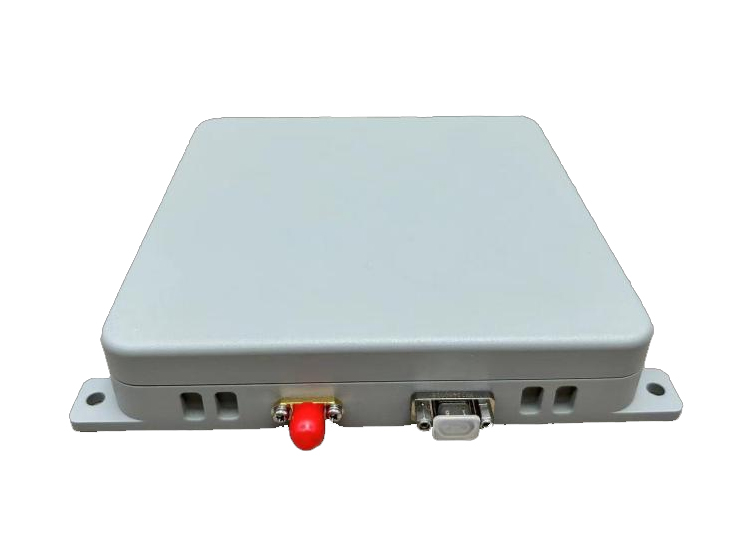
When a drone or unmanned vehicle loses GNSS lock due to jamming, the entire mission can be compromised. The BNT009ProB3 high performance anti‑jamming antenna is engineered to prevent that. This compact terminal integrates a 4‑element array, advanced nulling processor, and multi‑frequency receiver into a rugged 150×130mm housing. It delivers up to 105dBc single‑jammer suppression and handles three simultaneous interferers, making it a trusted choice for civilian UAVs and industrial automation.

This page covers the key specs, operational strengths, and common questions about the BNT009ProB3. If you need a field‑proven high performance anti‑jamming antenna for your autonomous platform, read on.
What Defines a High Performance Anti‑Jamming Antenna?
A high performance anti‑jamming antenna must do more than filter noise – it must actively cancel directional threats. The BNT009ProB3 uses a 4‑element circular array with adaptive spatial nulling. It detects the angle of arrival of each jammer and places deep nulls in those directions, preserving the authentic GNSS signals.
Why B1/B3/L1 Multi‑Frequency Support?
The BNT009ProB3 covers BeiDou B1, BeiDou B3, and GPS L1 bands. This triple‑frequency capability allows it to:
-
Reject jammers that target specific GNSS bands.
-
Leverage frequency diversity – if one band is fully blocked, others may still operate.
-
Provide redundancy for safety‑critical missions.
For users operating in China or regions with strong BeiDou coverage, the B3 band offers additional resilience. This high performance anti‑jamming antenna is tuned to protect all three bands without compromising sensitivity on any of them.


Interference Scenarios Handled
The adaptive algorithm inside the BNT009ProB3 is trained against the most common interference types encountered in real‑world drone operations:
-
Band‑limited Gaussian white noise – from wideband transmitters or communication relays.
-
Spread‑spectrum matched‑spectrum – often from spoofing devices or repeater stations.
-
Pulse interference – from radar systems or switching power supplies.
-
Sweep interference – from frequency‑hopping radios.
-
Mixed interference – multiple types arriving from different directions simultaneously.
The high performance anti‑jamming antenna automatically identifies each type and adjusts its nulling strategy without user intervention. This makes deployment simple and reliable.
Mechanical Design and Integration
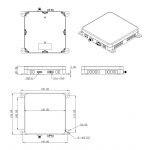
The BNT009ProB3 measures 150×130×26.5 mm and weighs 500 grams. Power consumption is ≤17W at room temperature, which suits most UAV power budgets. The RF output is available via standard SMA connectors with 50Ω impedance.
The housing is machined aluminium with a robust radome, rated for outdoor use. Mounting is via a 4‑hole flange, compatible with standard drone payload rails or ground vehicle roofs. No external ground plane is required – the array includes an integrated counterpoise.
Typical Use Cases
This high performance anti‑jamming antenna is ideal for:
-
Civilian drones – for surveying, inspection, and delivery in urban or suburban areas with high RF noise.
-
Unmanned ground vehicles (UGVs) – operating near industrial sites, ports, or mine sites where interference is common.
-
Mobile mapping systems – requiring continuous GNSS fix even under bridge overpasses or tree canopies.
-
Security and surveillance platforms – where intentional jamming is a known threat.
Its ability to cancel up to three jammers simultaneously makes it a step above basic single‑null designs.
Installation Quick Guide
Installing the BNT009ProB3 high performance anti‑jamming antenna involves four simple steps:
-
Mount – Secure the flange to your airframe or vehicle using M4 screws.
-
Connect RF – Attach the SMA output to your GNSS receiver’s L1/B3 input. Keep cable loss under 2dB.
-
Power – Supply 9‑36V DC via the provided JST connector. The internal regulator handles the rest.
-
Test – Power on and verify lock status via your receiver’s diagnostic interface.
No special calibration is needed – the adaptive nulling runs automatically on startup.
The BNT009ProB3 high performance anti‑jamming antenna brings professional‑grade interference rejection to platforms where reliability is non‑negotiable. With its 4‑element array, 105 dBc suppression, and multi‑band coverage, it provides a robust shield against both accidental and malicious GNSS interference.
For further reading, refer to the GNSS interference mitigation guide from GPS.gov, or explore community integration experiences on UAV forums. For custom integration support, please contact our technical team.