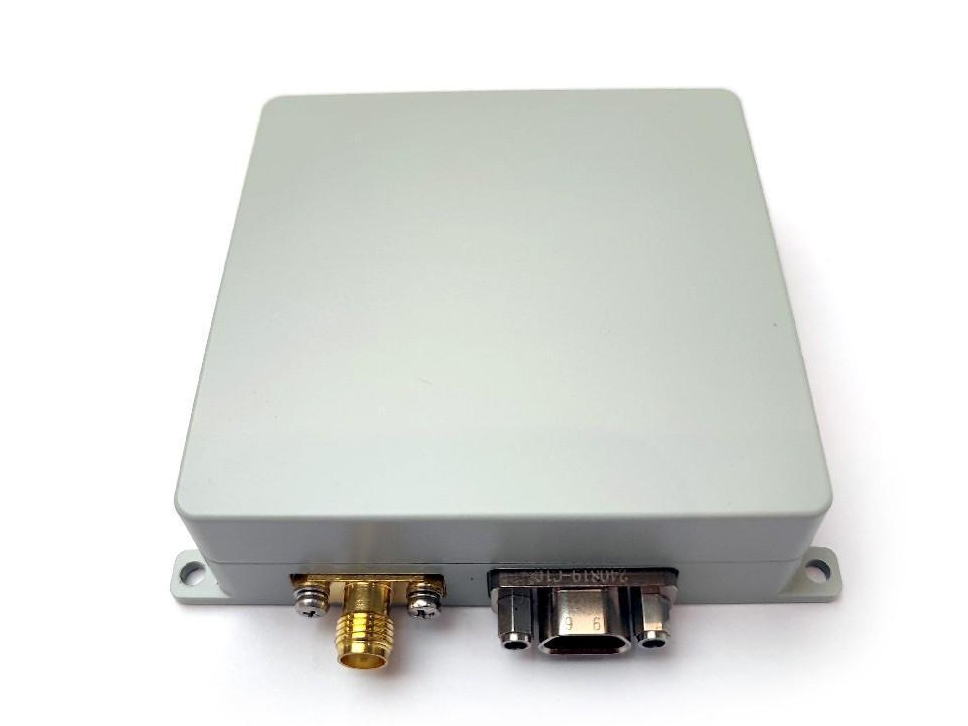
When a drone loses its GNSS lock, the mission often ends in failure – or worse. The BNTS654CH anti‑jamming GNSS antenna is built to prevent that. Designed for中小型 unmanned aircraft, this compact terminal combines a 4‑element array, anti‑jamming processor, and a L1/B1 receiver into a single 65mm housing. It delivers three‑layer interference suppression while keeping weight and power low enough for payload‑sensitive platforms.

This page covers the core specs, real‑world performance, and common questions about the BNTS654CH. If you need a lightweight, field‑proven anti‑jamming GNSS antenna for your UAV or robotic system, read on.
What Makes the BNTS654CH an Effective Anti‑Jamming GNSS Antenna?
The BNTS654CH uses a 4‑element circular array with adaptive null‑steering. Unlike simple filters, it actively places nulls in the direction of jammers – whether they are narrowband, wideband, or pulsed. The internal receiver then uses the cleaned signal to compute position, velocity, and time.
These figures mean that even in a crowded spectrum, the BNTS654CH anti‑jamming GNSS antenna keeps your position solution stable.
Why Choose a 4‑Element Over a Single‑Element Antenna?
A single‑element antenna has no spatial filtering – it receives everything from all directions. The 4‑element array in the BNTS654CH creates at least three independent nulls, so it can cancel multiple jammers at once. For drone operators, this translates to:
-
Reliable hover and waypoint navigation near cell towers or radar sites.
-
Consistent RTK performance in GNSS‑challenged urban canyons.
-
Reduced dependency on tactical retreat when interference appears.
In short, a 4‑element anti‑jamming GNSS antenna is the minimum practical choice for serious outdoor autonomy.


Interference Types That the BNTS654CH Handles
The adaptive algorithm inside the BNTS654CH is tuned for the interference patterns most common in civil and military drone operations:
-
Band‑limited Gaussian white noise – typical from wideband communication transmitters.
-
Spread‑spectrum matched‑spectrum interference – often from other GNSS repeaters or spoofers.
-
Pulse interference – from radar or switching power supplies.
-
Sweep interference – from frequency‑hopping radios.
-
Mixed interference – multiple types arriving simultaneously.
The anti‑jamming GNSS antenna detects each type and adjusts its nulling strategy without manual configuration. This makes it “set and forget” for most integration projects.
Mechanical and Power Design for UAV Integration
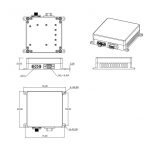
The BNTS654CH is 65×65×21 mm and weighs only 130 grams. It consumes ≤6 W at room temperature, which allows direct power from a typical flight controller’s 5V or 12V rail. The RF output is at standard L1/B1 frequencies with an impedance‑matched 50Ω SMA connector, so you can cable it to most existing GNSS receivers or onboard computers.
The housing is machined aluminium with a low‑profile radome, designed for top‑deck mounting or under‑slung payload bays. It meets IP54 splash resistance for light rain during take‑off and landing.
Typical Installation and Integration
Installing the BNTS654CH anti‑jamming GNSS antenna usually involves three steps:
-
Mounting – Secure the 4‑hole flange to your airframe using M3 screws. Keep the radome clear of metallic obstructions.
-
RF connection – Connect the SMA output to your receiver’s L1 input. Cable loss should be kept below 3dB to maintain the output power range (-75 to -85 dBm).
-
Power – Provide 5‑28V DC through the dedicated JST connector. The internal regulator handles the rest.
No special ground plane is required because the array includes its own counterpoise. This simplifies installation on carbon‑fibre or composite frames.
Conclusion
The BNTS654CH anti‑jamming GNSS antenna brings professional‑grade interference rejection to platforms where size, weight, and power are critical. With its 4‑element array, 95 dBc single‑jammer suppression, and broad spatial coverage, it is a reliable partner for drone deliveries, surveillance, and surveying in challenging RF environments.
For further reading, see the GNSS anti‑jamming techniques overview on GPS.gov, or check the UAV integration guide for community experiences. For custom integration support, Please contact our technical team.