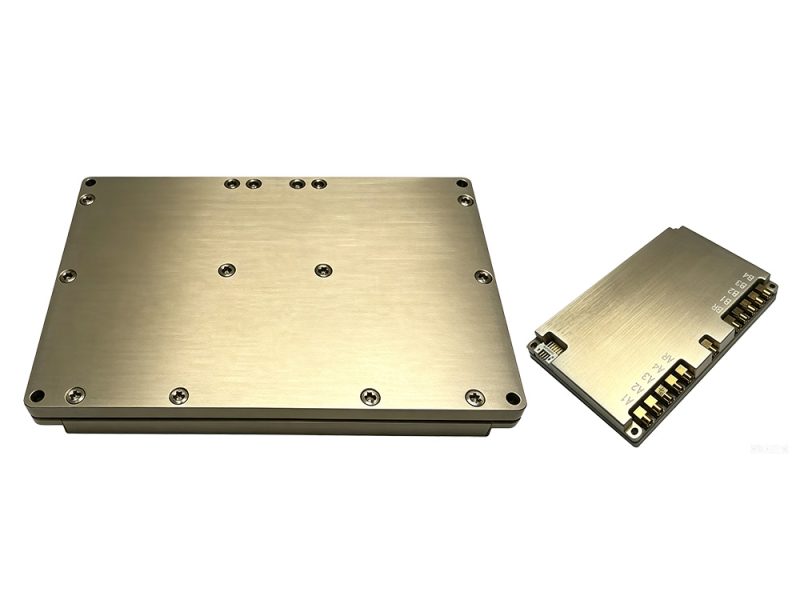
Anti-Jamming Antenna

Dual-Band Eight-Channel Anti-Jamming Antenna – BNTDF8BAJ

Dual-band eight-channel anti-jamming antenna processor, 8 RF inputs, nulls 3 or 7 jammers, 110dB single, 95dB triple, 80dB seven, 90x60x11mm, 96g, 9-36VDC.

Applications
UAVs Ground robots Small vehicles Portable timing systems Battery-powered aircraft Complex electromagnetic environments
Input channels 8 channels, max +10 dBm
Output channel 1 channel, -70 to -40 dBm
Supported bands BDS-B1, BDS-B3, GPS-L1, GPS-L2, GLONASS-L1, Galileo-E1
Max jammers nulled 3 or 7 different directions simultaneously
Input AGC Supported
Input voltage 9–36 VDC

What You Get

The BNTDF8BAJ dual-band eight-channel anti-jamming antenna is an RF processor built for GNSS receivers that must stay locked under deliberate or accidental interference. It accepts eight input channels, runs spatial nulling in real time, and delivers one cleaned output. The board targets UAVs, ground robots, and compact navigation systems where rack-sized gear cannot fit. Low cost, small size, and light weight define the design.
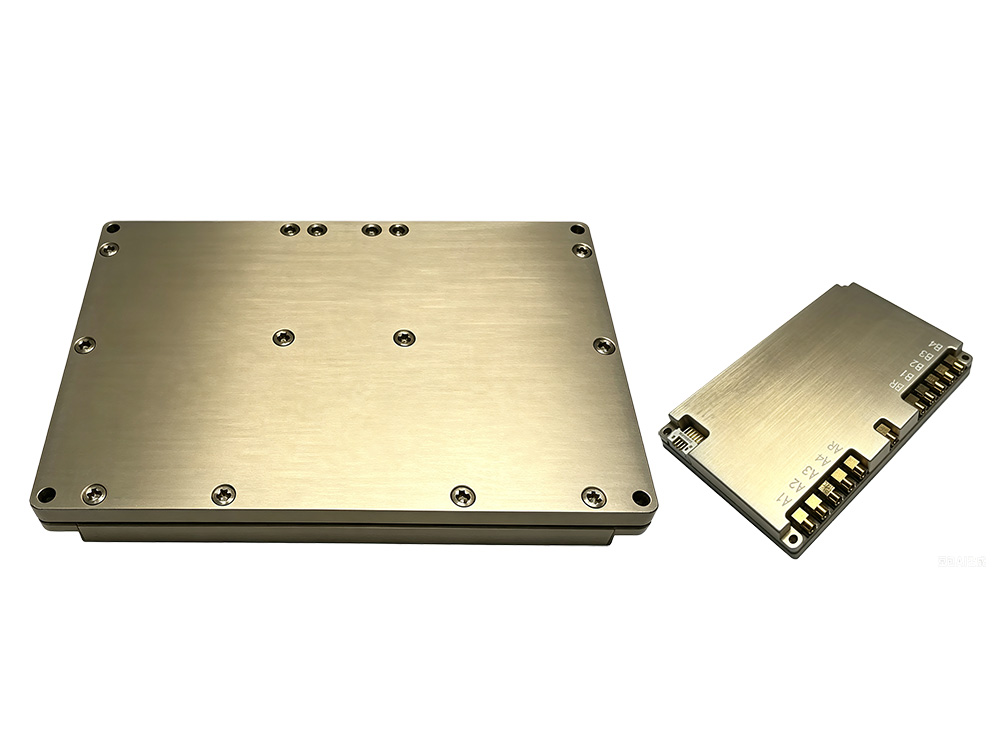
Dual-Band Eight-Channel Anti-Jamming Antenna - BNTDF8BAJ

Channel Flexibility

This dual-band eight-channel anti-jamming antenna processor supports two working configurations. You can run it as a single-band eight-element array for deeper nulling against more jammers. Or switch to a dual-band four-element setup that protects two frequency bands simultaneously. That flexibility lets one hardware platform cover different mission profiles without swapping modules.

Frequency Modes at a Glance

Supported bands cover BDS-B1, BDS-B3, GPS-L1, GPS-L2, GLONASS-L1, and Galileo-E1. Processing frequency and bandwidth are dynamically configurable, so the same board can be tuned for regional or global constellations. Whether your receiver relies on BDS B3 or GPS L1/L2, the unit adjusts through software without changing the RF chain.

Nulling Depth and Jamming Types

The BNTDF8BAJ dual-band eight-channel anti-jamming antenna suppresses broadband, narrowband, swept, pulsed, and combined suppression-style jammers. In single-jammer tests, rejection exceeds 110 dB. With three jammers, the processor still holds above 95 dB. When configured for seven simultaneous threats, nulling depth stays at 80 dB or better. The number of jammers it can cancel depends on the array mode: three in dual-band four-element mode, seven in single-band eight-element mode.

Power, Data, and Control

The board runs on 9–36 VDC and draws 16 W typical. Data output uses RS422 or UART at LVTTL levels through the JL126-2-12ZJW connector. One GPI and one GPO pin allow external blanking or status indication. The single RF output delivers a processed signal between -70 and -40 dBm, which suits most GNSS receiver inputs without external pads. Input AGC handles up to +10 dBm per channel.

Compact Build for Drones

Weighing 96 g and measuring 90×60×11±0.5 mm, this dual-band eight-channel anti-jamming antenna processor fits inside payload bays and small enclosures. Four Φ2.2 mm mounting holes keep installation simple. The low-profile design stacks with receivers or embeds directly into custom housings. That small footprint matters when every gram and millimeter counts on a battery-powered drone.

Why It Excels in Tough RF

Most lightweight anti-jam units sacrifice either channel count or frequency coverage. This dual-band eight-channel anti-jamming antenna processor keeps both. You get eight RF channels, dynamic band selection, and up to seven-jammer nulling in one board. External sources like GPS.gov explain common jamming threats.

Integration Pointers

Keep all RF input cables matched in length and phase for accurate spatial nulling. Mount the board away from switching regulators and high-current paths. Apply 9–36 VDC to pin 2 or 8, ground pin 1 or 7, and confirm RS422 or UART output before flight. When switching between single-band and dual-band modes, recalibrate the array to maintain rejection depth.

Connector Pinout

Pin Code IO Function
1 GND Ground
2 VIN+ IN 9–36 VDC
3 RS422-TXP OUT Transmit positive
4 RS422-RXP IN Receive positive
5 UART_TX OUT Transmit
6 GPI IN Input
7 GND Ground
8 VIN+ IN 9–36 VDC
9 RS422-TXN OUT Transmit negative
10 RS422-RXN IN Receive negative
11 UART_RX IN Receive
12 GPO OUT Output
Parameter Specification
Input channels 8 channels, max +10 dBm
Output channel 1 channel, -70 to -40 dBm
Input AGC Supported
Supported bands BDS-B1, BDS-B3, GPS-L1, GPS-L2, GLONASS-L1, Galileo-E1
Max jammers nulled 3 or 7 different directions simultaneously
Single-jammer rejection ≥110 dB
Triple-jammer rejection ≥95 dB
Seven-jammer rejection ≥80 dB
Data interface RS422 / UART (LVTTL)
Input voltage 9–36 VDC
Rated power 16 W
Weight 96 g
Dimensions 90×60×11±0.5 mm
Operating temperature -40°C to +70°C
Connector JL126-2-12ZJW
What is the BNTDF8BAJ?
The BNTDF8BAJ is a dual-band eight-channel anti-jamming antenna processor that suppresses GNSS interference across BDS-B1, BDS-B3, GPS-L1, GPS-L2, GLONASS-L1, and Galileo-E1. It outputs one cleaned RF signal.
How many jammers can it null at once?
In single-band eight-element mode, it nulls up to seven jammers from different directions. In dual-band four-element mode, it nulls up to three jammers per protected band simultaneously.
What rejection levels does the BNTDF8BAJ achieve?
Single-jammer rejection is at least 110 dB, three-jammer rejection stays above 95 dB, and seven-jammer rejection remains at 80 dB or better.
Which frequency bands are supported?
The processor supports BDS-B1, BDS-B3, GPS-L1, GPS-L2, GLONASS-L1, and Galileo-E1. Frequency and bandwidth are dynamically configurable.
Can it operate as a single-band or dual-band unit?
Yes. It supports single-band eight-element processing or dual-band four-element processing. Mode selection depends on your jamming threat and constellation needs.
What types of interference does it handle?
It suppresses broadband, narrowband, swept, pulsed, and combined suppression-style jamming. Input AGC prevents saturation from signals up to +10 dBm.
What is the output signal level?
The single RF output provides a processed signal between -70 and -40 dBm, compatible with most GNSS receivers without additional attenuation.
What power supply and interfaces are required?
The board runs on 9–36 VDC and draws 16 W. Data interfaces include RS422 and UART at LVTTL levels, with one GPI and one GPO for control.
How compact is the BNTDF8BAJ?
It measures 90×60×11±0.5 mm and weighs 96 g. Four Φ2.2 mm mounting holes simplify integration into drones and small enclosures.
What is the operating temperature range?
The processor works from -40°C to +70°C, suitable for outdoor, airborne, and vehicle-mounted GNSS applications in harsh environments.

Have Questions? Contact Us