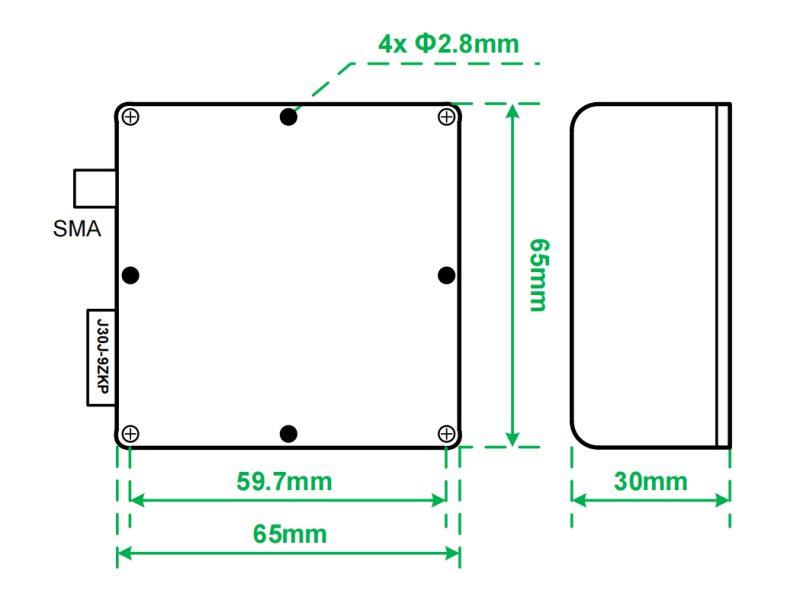
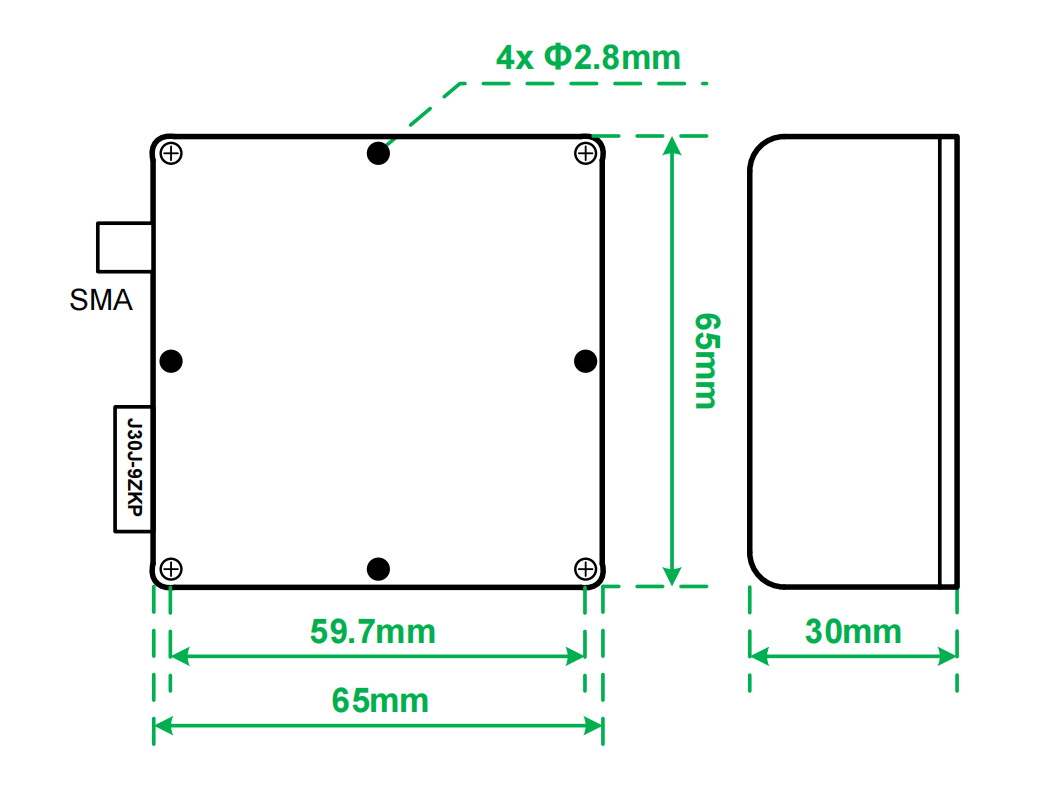
The Satellite Navigation Anti-Jamming Integrated Unit known as BNTTIM was built for one reason: keeping your GPS lock alive when the RF environment turns ugly. If you operate drones, run electronic countermeasure tests, or manage communication base stations, you already know how fast a cheap jammer can knock out positioning. This tiny box—65mm × 65mm × 30mm—fits where most aviation or vehicle antennas already sit, yet it packs a four-element array, anti-jamming processor, and a u-blox M10S receiver into a single housing.
Why the BNTTIM Satellite Navigation Anti-Jamming Integrated Unit Stands Out
Most compact GNSS antennas don’t do anti-jamming at all. They amplify whatever hits the patch, including interference. The BNTTIM takes a different route. Its four-element array enables spatial filtering, which means it can place nulls toward unwanted signals while keeping gain toward satellites. The result? A single jammer is suppressed with a J/S ratio of at least 105 dB. Three jammers from different directions get 85 dB or better. That’s not just filtering—that’s surgical removal.
What Interference Does the Satellite Navigation Anti-Jamming Integrated Unit Handle?
The unit targets L1, B1, and E1 bands—covering GPS L1, BDS B1, and Galileo E1. It rejects wideband, narrowband, swept, pulsed, and combined interference styles. Whether someone’s running a continuous tone or hopping across the band, the BNTTIM nulls it out and keeps the navigation fix steady.
Integration Without the Headaches
You don’t need a separate anti-jam box, extra cables, or a rack of gear. The BNTTIM outputs standard NMEA 0183 over RS232 at 115200 baud by default. Two serial ports give you flexibility for connecting to a flight controller, autopilot, or test equipment. Power input ranges from 9 to 36 V DC, so it works with 12V drone batteries or 28V aircraft buses without a converter.
Built for Real Electromagnetic Environments
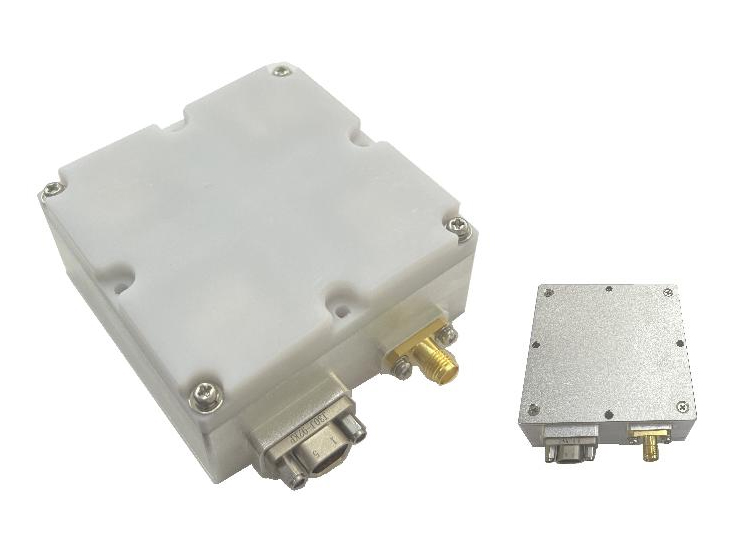
This satellite navigation anti-jamming integrated unit handles continuous wave power up to 10W without damage. That matters when you’re operating near radar, broadcast towers, or intentional jammers. The housing is light gray, weighs only 185 grams, and has four mounting holes spaced 59.7mm × 59.7mm for easy retrofit. Operating temperature runs from -40°C to +70°C, so it survives desert heat and high-altitude cold.
Installation and Retrofit
Swapping out an old antenna takes minutes. Remove the existing unit, line up the four 2.8mm through-holes, and bolt the BNTTIM down. Connect power and serial lines via the J30J-9ZKP connector. If your platform uses a different antenna footprint, a simple adapter plate solves it. Because the BNTTIM outputs RS232, you can wire it directly to most autopilots without level shifters.
Field Testing Notes
A satellite navigation anti-jamming integrated unit like the BNTTIM needs proper grounding for peak performance. Before deploying, run a quick bench test with a known jamming source. The BNTTIM should maintain lock within a few seconds of null formation. If you see intermittent fixes, check grounding and cable shielding—these units are sensitive to poor RF hygiene. The integrated receiver is an M10S, which supports multi-constellation and gives fast cold starts.
RTK and Differential Compatibility
The BNTTIM outputs standard NMEA messages, so it works with RTK-capable receivers as a clean RF source. While the built-in M10S doesn’t perform RTK itself, you can feed the anti-jammed RF to an external RTK receiver if you need centimeter accuracy. For most drone navigation tasks, the M10S’s 1.5m standalone accuracy is plenty.
Who Should Use the BNTTIM?
Drone operators facing GPS denial, electronic warfare test ranges, and critical communication sites that need reliable timing all benefit. If you’ve ever watched a drone drift because someone keyed a radio nearby, the BNTTIM Satellite Navigation Anti-Jamming Integrated Unit is the fix you’ve been waiting for. It’s also a solid drop-in upgrade for existing BNT2512 16-element antenna users who need a smaller footprint without sacrificing core protection.
For more on u-blox M10 receiver technology, check the official u-blox M10 series page.