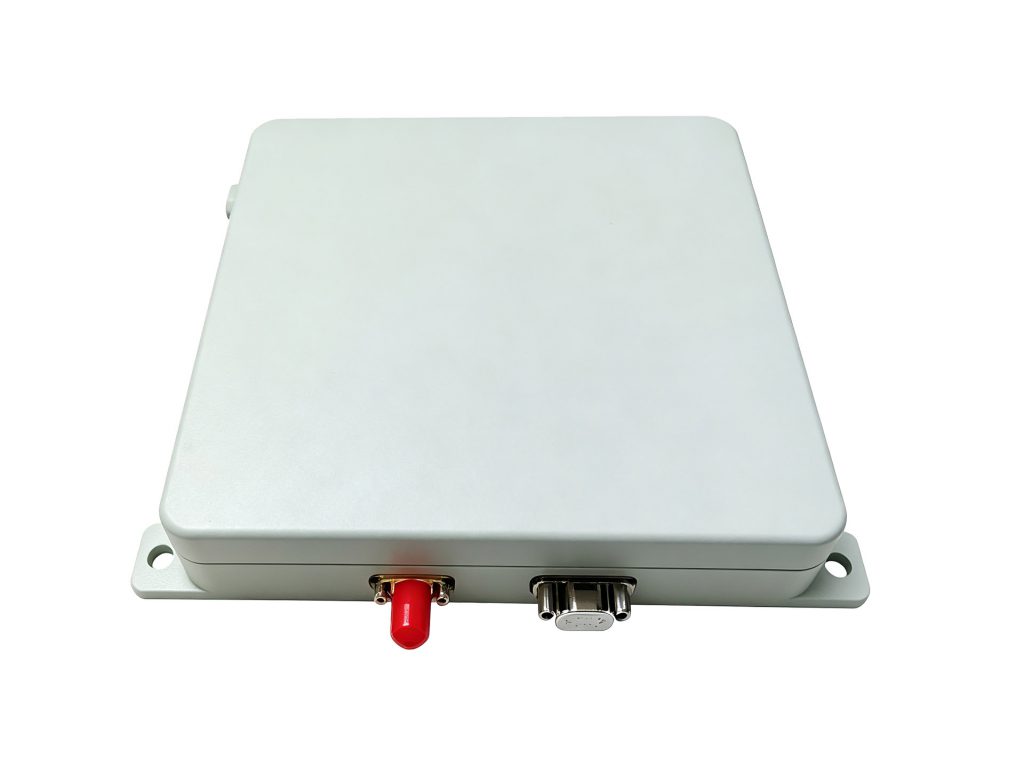
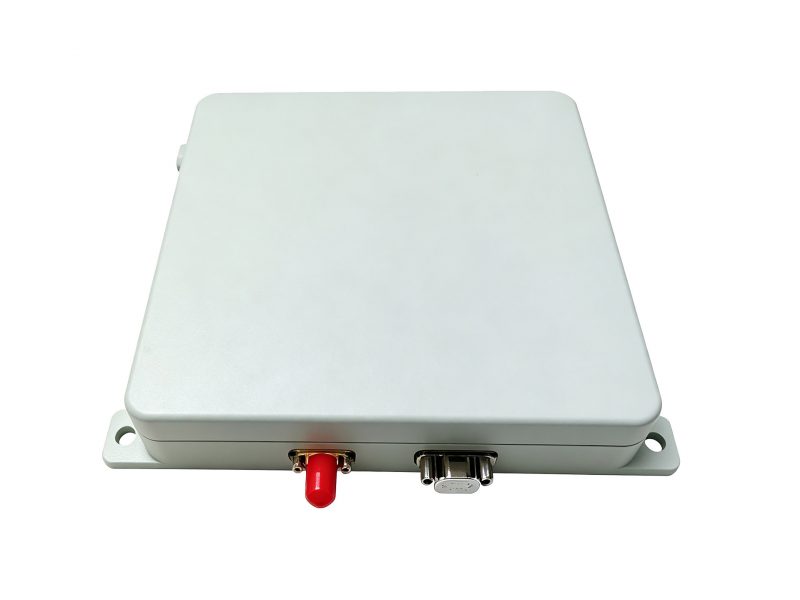
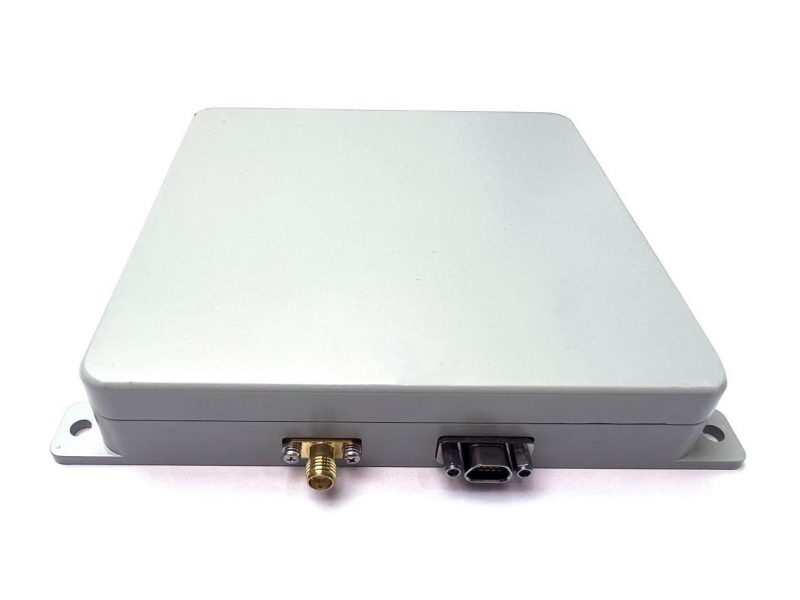
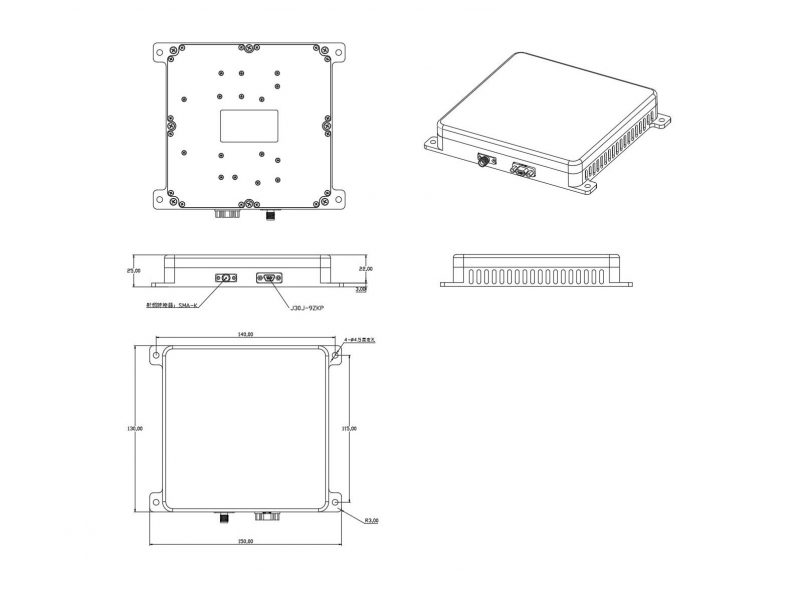
The BNT2501 High Precision Anti-Jamming Antenna is a compact dual-frequency module built for GPS L1 and BDS B1i reception. It combines an antenna array, anti-jamming processor, and u-blox M10 GNSS receiver in a single 150 mm × 130 mm × 22 mm enclosure. At under 520 g, it suits small UAVs, ground vehicles, and timing nodes that need clean positioning signals without adding bulky RF hardware.

Why the High Precision Anti-Jamming Antenna Fits Tight Spaces
Space and weight often decide what can fly or deploy. This unit replaces a standard active antenna or a separate receiver chain, so integration is straightforward. The RF output provides L1/B1 signals at −70 to −60 dBm, while the TTL serial port can deliver NMEA or UBX data directly. That dual-path design means you can feed a flight controller, a timing card, or an external receiver without extra down-conversion.

RF Performance and Jamming Rejection
The high precision anti-jamming antenna handles three simultaneous jammers. For a single interferer, the jammer-to-signal ratio reaches at least 105 dB. With three interfering signals, J/S stays at or above 95 dB. It suppresses narrowband, broadband, pulse, swept, and Gaussian jamming across L1 and B1. The array processing also detects interference power and runs self-checks, which helps field teams spot degraded spectrum before navigation drifts.
Frequency coverage:
L1: 1575.42 MHz
B1: 1561.098 MHz
Positioning accuracy is specified at ≤1.5 m horizontal and ≤1.5 m vertical at 95%. Velocity error stays under 0.2 m/s, and timing stays within 100 ns. These figures make the BNT2501 practical for precision timing and dynamic navigation.
Spoofing Protection and Clean Signal Output
Beyond jamming, the BNT2501 High Precision Anti-Jamming Antenna suppresses asynchronous, synchronous, and repeater spoofing. Residual spoofed signal CN0 remains below 20 dB, so downstream receivers are less likely to lock onto false peaks. The built-in receiver outputs a clean signal after anti-spoofing, which is useful for critical timing and defense-related navigation safety.
How the High Precision Anti-Jamming Antenna Simplifies System Design
The integrated architecture removes the need for separate low-noise amplifiers, downconverters, and anti-jamming boards. You mount one box, connect power and either TTL or SMA, and the RF chain is already aligned. This saves integration time and reduces cable loss issues. Since the BNT2501 uses a u-blox M10 receiver, most autopilot and timing software recognizes its NMEA or UBX output without custom drivers.
Mechanical and Power Notes
The module runs from a 5–17 V DC input through an XT30 connector and draws no more than 13 W. It also includes overvoltage protection and can withstand continuous wave energy of at least 10 W at the RF input. M3 screws are used for mounting, and the housing is light gray. Environmental limits are −40 °C to +55 °C operating and −55 °C to +70 °C storage, with 96% humidity at 40 °C. Rain exposure meets GJB150A, and the SMA output is a single-line RF feed, so no separate power injector is required for the antenna stage.
Installation and Field Use
Use either the TTL serial path or the SMA RF output—not both. For flight controllers, connect the supplied TTL lines to the GNSS UART: TX to RX, RX to TX, and GND to GND. For an external receiver, use an SMA cable from the RF port to the receiver antenna input, but make sure that port does not feed more than 5 V back into the BNT2501. USB-TTL tools should not be hot-plugged.
Timing networks in power and telecom rely on stable GNSS; a single jammer can degrade sync. UAV and ground robotics teams use this high precision anti-jamming antenna to keep position fixes stable near interference sources. Logistics and convoy security also benefit when spoofing is a concern. Overall, the BNT2501 is designed for operators who need dependable PNT under contested or noisy RF conditions without complex external processing.
You can review GPS L1 modernization and BeiDou system resources.