
If you work with GNSS-dependent systems, you already know that jamming and interference are no longer theoretical risks. They are everyday problems. The BNTWL340 dual-frequency 16-channel anti-jamming antenna is built to handle those problems, but buyers and integrators often have practical questions before they commit. Below are the questions we hear most often, answered in plain terms.
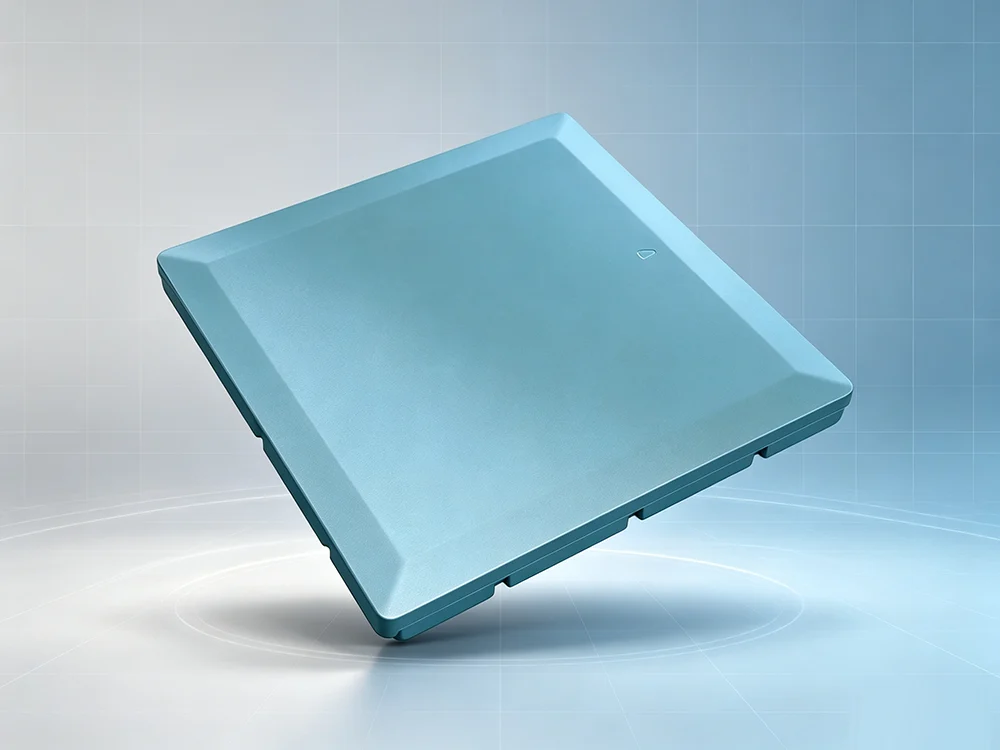
Q: What does “dual-frequency” actually mean on this antenna?
It means the antenna works across two GNSS frequency bands rather than one. That matters because jamming devices rarely target a single frequency. By covering two bands, the BNTWL340 gives your receiver more room to keep a fix when interference appears. In practice, this improves continuity for positioning, navigation, and timing outputs.
Q: Why 16 channels? Is that overkill?
Not at all. Each channel supports the antenna’s interference mitigation process. More channels generally mean better spatial filtering and more stable performance when multiple interference sources are present. For UAVs, survey equipment, and timing infrastructure, 16 channels provide a useful margin of safety without making the unit difficult to integrate.
Q: What are the main specifications?
Here is a quick reference table for the core parameters:
| Parameter | Specification |
|---|---|
| Product model | BNTWL340 |
| Frequency capability | Dual-frequency GNSS |
| Channels | 16 |
| Primary function | Anti-jamming / interference mitigation |
| Typical applications | UAVs, surveying, timing systems, vehicle tracking |
| Mounting | Standard antenna mounting interface |
| Output compatibility | Common GNSS receiver inputs |
Note: Always confirm exact electrical and mechanical details with the manufacturer’s datasheet before integration.
Q: How does it perform on a UAV?
This is where the BNTWL340 earns its keep. UAVs fly in open sky, but they also fly near buildings, power lines, and deliberate jammers. The dual-frequency design and 16-channel processing help maintain satellite lock during takeoff, landing, and low-altitude maneuvers. That translates into fewer position dropouts and smoother autopilot behavior. If you are still comparing options, our guide on How to Choose an Anti-Jamming Antenna for UAVs walks through the selection criteria in more detail.
Q: Is installation complicated?
No. The BNTWL340 uses a standard mounting approach, so it fits into most existing antenna setups without custom fabrication. The main things to watch are clear sky view, secure cabling, and keeping the antenna away from strong onboard noise sources. A clean installation often matters as much as the antenna itself.
Q: What kind of interference does it handle?
It is designed for common GNSS jamming and interference scenarios, including broadband noise and targeted disruption. The 16-channel architecture supports the antenna’s ability to distinguish desired satellite signals from unwanted energy. For mission-critical work, pair it with a receiver that supports anti-jamming input processing.
Q: Who should consider this model?
If your application depends on reliable GNSS positioning and you operate in environments where interference is possible, the BNTWL340 is a sensible fit. That includes UAV operators, survey teams, fleet managers, and timing network engineers. It is not a consumer-grade accessory, but it is also not complicated to deploy.
Q: Where can I get the full technical details?
The product page is the best starting point: BNTWL340 Dual-Frequency 16-Channel Anti-Jamming Antenna. Review the datasheet, confirm your receiver compatibility, and check the environmental ratings for your specific use case.
Final thought
Choosing an anti-jamming antenna is not about chasing the biggest number on a spec sheet. It is about matching the antenna to your interference environment, your platform, and your positioning requirements. The BNTWL340 offers a balanced combination of dual-frequency coverage, 16-channel processing, and practical integration, making it a strong candidate for professional GNSS users who need dependable performance without unnecessary complexity.